
Kia Picanto: Air bag—supplemental restraint system / Driver's and passenger's front air bags. Side air bag : (if equipped)
Driver's and passenger's front air bags
|
Figure 1. Driver’s front air bag 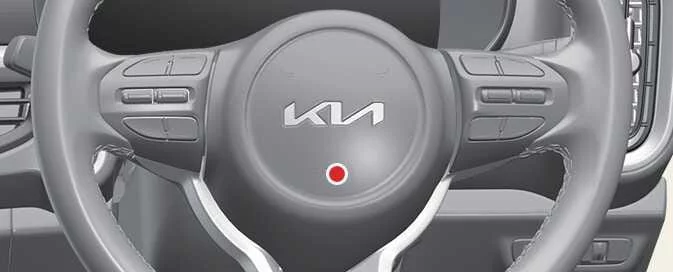
|
|
Figure 2. Driver’s knee air bag (if equipped) 
|
|
Figure 3. Passenger’s front air bag (if equipped) 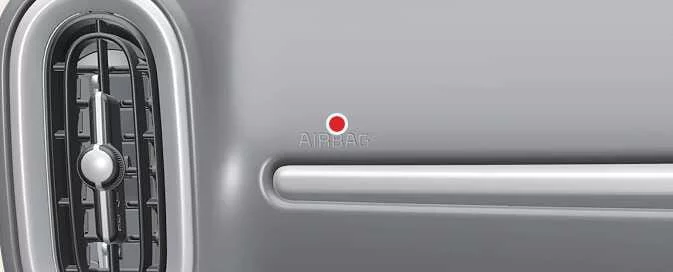
|
The words AIR BAG identify the relevant air bag covers. These markings are moulded into the steering wheel air bag pad cover and, where the corresponding equipment is fitted, the driver’s knee bolster cover below the steering wheel and the front passenger’s instrument panel cover above the glove box.
The front air bag modules are housed in the centre of the steering wheel, in the knee bolster beneath the steering column where equipped, and in the passenger-side instrument panel above the glove box where equipped. When the SRS control module (SRSCM) detects a sufficiently severe frontal impact, it automatically triggers deployment of the front air bags.
As the air bags expand, the pressure separates the tear seams moulded into their pad covers. The covers then open further, allowing the air bags to emerge from their storage compartments and inflate fully.
A fully inflated front air bag works together with a correctly worn seat belt to slow the driver’s or front passenger’s forward movement. By helping control this movement during the collision, the restraint system reduces the risk of injury to the head and chest.
Immediately after reaching full inflation, the air bag begins to deflate. This rapid deflation helps restore the driver’s forward view and allows access to the steering wheel and other vehicle controls after deployment.
NOTE
Read and follow the WARNING, CAUTION and NOTE information in the Air bag Precautions section. Those instructions explain the seating, handling and servicing precautions that apply to the air bag system.
Side air bag : (if equipped)
Where this equipment is fitted, your Kia Picanto has a side air bag in each front seat, providing additional protection for the driver and front passenger.
The side air bags supplement the protection provided by the seat belts. They work alongside the belts during qualifying collisions and do not replace the need for every occupant to remain properly restrained.

|

|
The air bags fitted to your vehicle may differ from those shown in the illustrations. Refer to the equipment installed in your particular vehicle when identifying the available restraint features.
Side air bags are designed to deploy in certain side-impact collisions, depending on the severity of the crash. They are not intended to inflate in every side impact, so the occurrence of a side collision alone does not necessarily mean that deployment will take place.
NOTE
Read and follow the WARNING, CAUTION and NOTE information in the Air bag Precautions section. These instructions explain the safety requirements that apply to the air bag system and its occupants.
 Airbag warning and indicator light. SRS components and functions
Airbag warning and indicator light
Airbag warning light
Operating conditions
When your Kia Picanto is started, the air bag warning light should illuminate for approximately 3–6 se..
 Curtain air bag. Airbag collision sensors
Curtain air bag
The actual air bags installed in the vehicle may diffe..
Other information:
Ford Explorer 2020-2026 Service Manual: Diagnosis and Testing - Glass, Frames and Mechanisms
Diagnostic Trouble Code (DTC) Chart Diagnostics in this manual assume a certain skill level and knowledge of Ford-specific diagnostic practices. REFER to: Diagnostic Methods (100-00 General Information, Description and Operation). Diagnostic Trouble Code Chart Module DTC Description Action DDM B1088:8..
Ford Explorer 2020-2026 Service Manual: Removal and Installation - Low Voltage Differential Signalling (LVDS) Cable
Special Tool(s) / General Equipment Interior Trim Remover Removal NOTE: Removal steps in this procedure may contain installation details. All vehicles Remove the upper instrument trim panel. Remove the screws. Torque: 22 lb...
Categories
- Manuals Home
- 6th Generation Explorer Owners Manual
- 6th Generation Explorer Service Manual
- Electric Parking Brake
- Removal and Installation - Front Halfshaft Speed Sensor
- General Procedures - Rear Camber Adjustment
- New on site
- Most important about car
Windshield Wipers
 Push the lever up or down to operate
the windshield wipers.
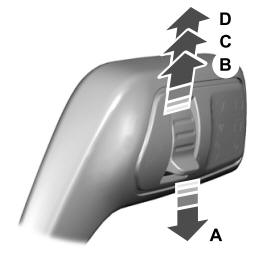
A - Single wipe.
