Kia Picanto: Driving your vehicle / Economical operation
Fuel economy in your Kia Picanto depends largely on how you drive, the roads you use and the conditions in which you travel. Smooth driving, suitable speeds and regular maintenance all contribute to economical everyday use.
These factors influence the distance you can cover on each litre or gallon of fuel. The following practices can help reduce fuel consumption while also limiting unnecessary wear and repair costs:
-
Drive smoothly and accelerate progressively at a moderate rate. Avoid sudden starts, full-throttle gear changes and racing from one set of traffic lights to the next. Maintain a steady cruising speed where conditions allow, and anticipate the flow of traffic so that you do not need to accelerate and slow down repeatedly. Avoid heavily congested routes whenever practical.
Leave a safe distance from the vehicle ahead. Having enough space to respond gradually reduces unnecessary braking and helps limit wear on the brakes.
-
Choose a moderate driving speed. Higher speeds generally require more fuel, so maintaining a sensible pace is one of the most effective ways to improve economy. This is particularly worthwhile on longer highway journeys, where sustained high speeds can increase consumption.
-
Do not “ride” the brake pedal or rest your foot on it while driving. Even light, continuous pressure can increase fuel consumption and accelerate brake wear. It can also overheat the brakes, reduce their effectiveness and create a potentially dangerous braking situation.
-
Keep the tyres inflated to the recommended pressures and check them at least once a month. Both overinflation and underinflation cause unnecessary tyre wear. Maintaining the correct pressures is an important part of caring for your tyres and supporting efficient vehicle operation.
-
Make sure the wheels are correctly aligned. Striking a kerb or driving too quickly over uneven surfaces can disturb alignment. Poor alignment accelerates tyre wear, can increase fuel consumption and may contribute to other problems, so it should not be overlooked.
-
Maintain your Kia Picanto according to the maintenance schedule in section 8. Keeping the vehicle in good condition supports fuel economy and helps control maintenance costs. If you regularly drive in severe operating conditions, servicing is required more frequently; consult section 8 for the applicable requirements.
-
Keep the vehicle clean and remove materials that can cause corrosion. Pay particular attention to the underside, where mud, dirt, ice and other deposits can accumulate unnoticed. This build-up adds unnecessary weight, can increase fuel consumption and encourages corrosion, affecting the vehicle’s condition over time.
-
Carry only the weight you need for your journey. Unnecessary items left in the vehicle add to its load, and additional weight reduces fuel economy. Remove unused cargo rather than carrying it on every trip.
-
Avoid leaving the engine idling longer than necessary. If you are parked and waiting, rather than stopped in traffic, switch the engine off and restart it when you are ready to leave.
-
The engine does not need an extended warm-up period before driving. After starting, allow it to run for 10 to 20 seconds before selecting a gear. In very cold weather, allow a slightly longer warm-up period before moving off.
-
Avoid both labouring and over-revving the engine. Labouring, also called “lugging”, happens when you drive too slowly in a gear that is too high, causing the engine to struggle or the vehicle to buck. Select a lower gear if this occurs. Over-revving means running the engine beyond its safe speed limit; changing gears at the recommended speeds helps prevent it.
-
Use the air conditioning only as much as needed. The system draws power from the engine, so operating it adds to the engine’s workload and reduces fuel economy.
-
Driving with the windows open at high speeds can reduce fuel economy. Consider this when choosing how to ventilate the cabin during faster journeys.
-
Headwinds and crosswinds can increase fuel consumption. Reducing your speed in these conditions can help offset part of the loss in fuel economy while keeping your pace appropriate for the weather.
Keeping your Kia Picanto in sound operating condition matters for both running costs and safety. Have the vehicle serviced by a professional workshop so that its maintenance needs receive proper attention.
Kia recommends visiting an authorised Kia dealer or service partner for servicing and maintenance.
WARNING
Engine off during motion
Never switch off the engine to coast downhill or while the vehicle is moving for any other reason. Power-assisted steering and braking will not function properly without the engine running, making the vehicle more difficult to control. Keep the engine running and select an appropriate lower gear so that engine braking helps control your speed on descents. Turning off the ignition while driving could also engage the steering wheel lock, causing a loss of steering control and potentially resulting in serious injury or death.
 ISG system malfunction
The system may not operate when:
A fault occurs in an ISG-related sensor or elsewhere in the Idle Stop and Go system, preventing normal
automatic stop and restart operati..

Other information:
Ford Explorer 2020-2026 Service Manual: General Procedures - Wheel to Tire Runout Minimization
Check NOTE: Road Force® values in illustrations are shown in pounds. NOTE: Match mounting is a technique used to reduce radial runout or road force on wheel and tire assemblies. Excessive runout is a source of ride quality complaints and match mounting can be used to minimize the runout...
Ford Explorer 2020-2026 Service Manual: Removal and Installation - Liftgate Moulding
Removal NOTE: Removal steps in this procedure may contain installation details. Remove the liftgate trim panel. Refer to: Liftgate Trim Panel (501-05 Interior Trim and Ornamentation, Removal and Installation). Disconnect the washer hose and the electrical connector...
Categories
- Manuals Home
- 6th Generation Explorer Owners Manual
- 6th Generation Explorer Service Manual
- General Procedures - Transmission Fluid Drain and Refill
- Removal and Installation - Front Halfshaft Speed Sensor
- Automatic Transmission - 10-Speed Automatic Transmission – 10R60
- New on site
- Most important about car
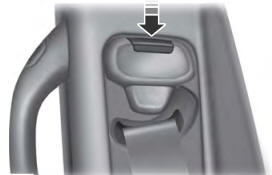
Seatbelt Height Adjustment
WARNING: Position the seatbelt height adjuster so that the seatbelt rests across the middle of your shoulder. Failure to adjust the seatbelt correctly could reduce its effectiveness and increase the risk of injury in a crash.