Ford Explorer: Rear Drive Halfshafts / Removal and Installation - Rear Halfshaft
Removal
NOTICE: Never pick up or hold the halfshaft by only the inner or outer CV joint. Damage to the CV joint will occur.
NOTICE: Never use a hammer to remove or install the halfshafts. Damage to the CV joint may occur.
NOTICE: Never use the halfshaft assembly as a lever to position other components. Damage to the halfshaft or CV joint may occur.
NOTICE: Do not allow the boots to contact sharp edges or hot exhaust components. Damage to the halfshaft boots will occur.
NOTICE: Do not drop assembled halfshafts. The impact may cut the boots from the inside without evidence of external damage.
NOTE: LH shown RH similar.
-
Remove the wheel knuckle.
Refer to: Wheel Knuckle (204-02 Rear Suspension, Removal and Installation).
-
Using a pry bar, remove the halfshaft.
.jpg) |
-
Remove and discard the inner halfshaft circlip.
.jpg) |
-
Clean and inspect the inner halfshaft seal surface and splines for damage.
.jpg) |
-
Clean and inspect the outer CV (constant velocity) housing at the shown locations.
.jpg) |
Installation
NOTE: LH shown RH similar.
-
NOTE: The halfshaft seal has to be replaced whenever the halfshaft is removed.
Replace the halfshaft seal.
Refer to: Rear Halfshaft Seal (205-02 Rear Drive Axle/Differential, Removal and Installation).
-
Install a new inner halfshaft circlip.
.jpg) |
-
NOTICE: After insertion, pull the halfshaft inner end to make sure the circlip is locked.
NOTE: Make sure that the circlip opening is located at the bottom or 6 o'clock position to allow easy halfshaft installation.
NOTE: When seated correctly, the halfshaft retainer circlip can be felt as it snaps into the differential side gear groove.
Install the halfshaft until the halfshaft circlip is fully seated.
.jpg) |
-
Install the wheel knuckle.
Refer to: Wheel Knuckle (204-02 Rear Suspension, Removal and Installation).
-
Check and top off the rear differential fluid.
Refer to: Differential Fluid Level Check (205-02 Rear Drive Axle/Differential, General Procedures).
 Diagnosis and Testing - Rear Drive Halfshafts
Preliminary Inspection
Visually inspect the CV joints, housing, boots, and clamps for obvious signs of mechanical damage.
If an obvious cause for an observed or reported concern is
foun..
 Brake System
..
Other information:
Ford Explorer 2020-2026 Service Manual: General Procedures - Air Conditioning (A/C) System Leak Test Using Forming Gas - Vehicles With: R134A Refrigerant/R1234YF Refrigerant
Special Tool(s) / General Equipment Forming Gas Pressure Gauge and Leak Detector Materials Name Specification Forming Gas - Leak detection All vehicles NOTE: Use a Rotunda-approved Tracer Gas A/C System Dealership Leak Detection Service Kit that meets SAE J2790...
Ford Explorer 2020-2026 Service Manual: Diagnosis and Testing - C Clutch
Symptom Chart C Clutch For C clutch operation, REFER to: C Clutch (307-01A Automatic Transmission - 10-Speed Automatic Transmission – 10R60, Description and Operation). C Clutch Condition Possible Sources Action C clutch does not apply SSC mechanically stuck OFF INSTALL a new solenoid...
Categories
- Manuals Home
- 6th Generation Explorer Owners Manual
- 6th Generation Explorer Service Manual
- Body and Paint
- Body and Paint
- Interior Trim and Ornamentation
- New on site
- Most important about car
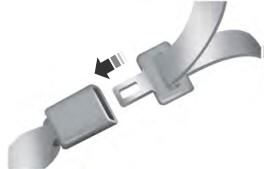
Fastening the Seatbelts
The front outboard and rear safety restraints in the vehicle are combination lap and shoulder belts.