Kia Picanto: Maintenance / Engine Oil
Checking the Engine Oil Level
Engine oil lubricates moving parts, helps cool the engine and operates various hydraulic components. Some oil consumption while driving is normal, so check the level regularly and top it up when needed.
Check the engine oil and maintain the level within the recommended range throughout the service interval. Keeping the oil at the correct level helps preserve its protective performance.
Use the following procedure to check the engine oil level in your Kia Picanto.
|
Figure 1. Petrol 1.0 MPI and 1.0 FFV 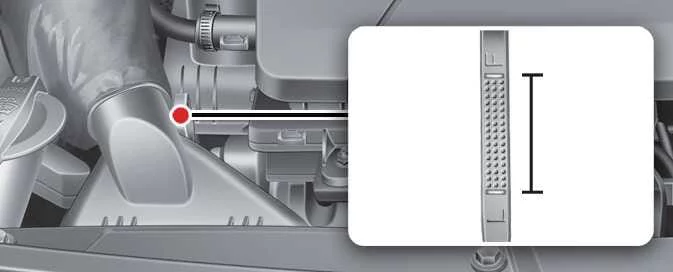
|
Figure 2. Petrol 1.2 MPI 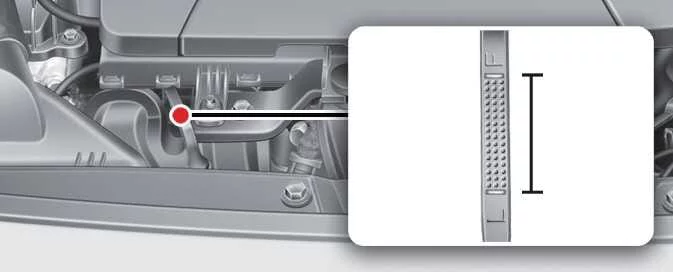
|
|
Figure 3. Smartstream G1.0 and Smartstream G1.2 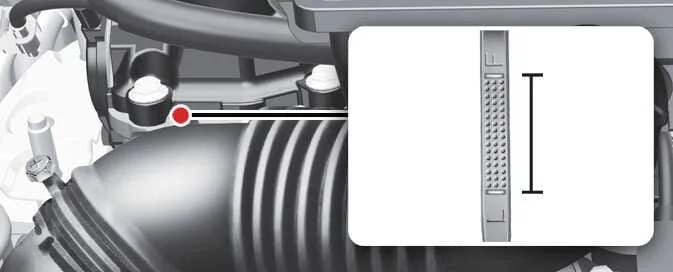
|
Figure 4. Smartstream G1.0 GDi 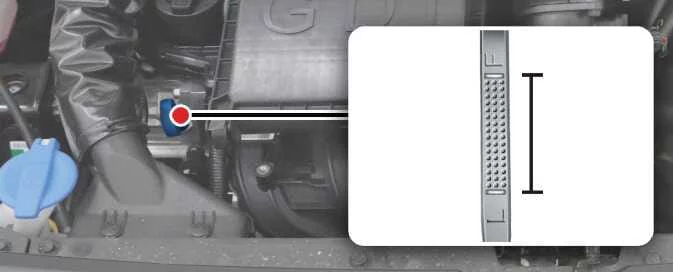
|
-
Park the vehicle on level ground so the oil can settle evenly in the engine.
-
Start the engine and let it reach its normal operating temperature.
-
Switch off the engine, remove the oil filler cap and pull out the dipstick. Wait 15 minutes to allow the oil to drain back into the oil pan.
-
Wipe the dipstick clean with a cloth, then insert it fully into its tube.
-
Pull the dipstick out again and read the level. It should be between the F and L marks. If it is below the L mark, add enough oil to bring the level up to the F mark.
Warning
Radiator hose: Take care not to touch the radiator hose while checking or adding engine oil. It may be hot enough to cause burns.
Caution
Wipe the oil-level dipstick with a clean cloth. Debris on the dipstick can contaminate the oil and damage the engine.
|
Figure 5. Petrol 1.0 MPI and 1.0 FFV 
|
Figure 6. Petrol 1.2 MPI 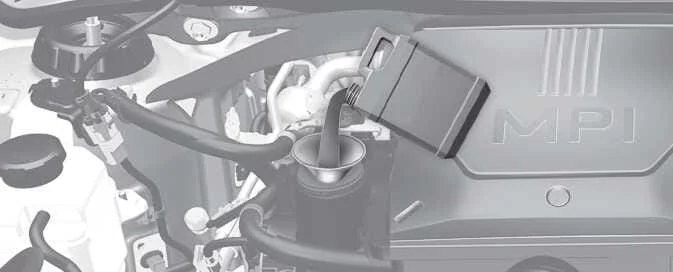
|
|
Figure 7. Smartstream G1.0 and Smartstream G1.2 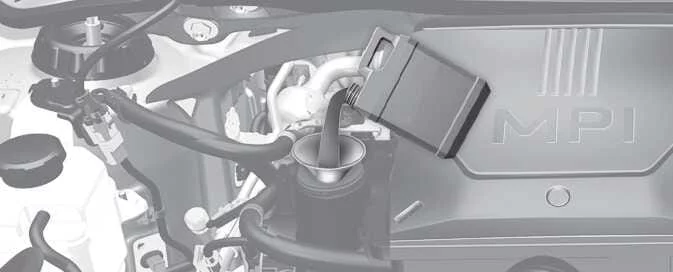
|
Figure 8. Smartstream G1.0 GDi 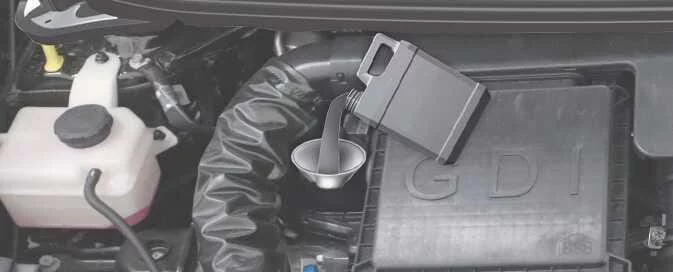
|
Use a funnel when topping up the oil to reduce the risk of spills on engine components.
Use only the engine oil specified for your vehicle. Refer to the recommended lubricants and capacities for the correct specification.
-
Avoid spilling oil when topping up or changing it. If oil gets onto engine components, wipe it off promptly.
-
Oil consumption may be higher while a new vehicle is being run in. It is expected to stabilise after approximately 6,000 km (4,000 miles).
-
Oil consumption can vary with driving habits, climate, traffic conditions and oil quality. Check the Kia Picanto engine oil level regularly and top it up when necessary.
Changing the Engine Oil and Filter
Have the engine oil and filter changed by a qualified workshop. Kia recommends using an authorised Kia dealer or service partner.
Tip
Smartstream G1.0 GDi: As the engine oil is used, its lubricating, rust-prevention, cooling and cleaning properties gradually diminish. Have the oil and filter changed in accordance with the Engine Oil Life Management System instructions or the maintenance schedule, through an authorised Kia dealer or service partner.
-
If an oil change is delayed beyond the maintenance schedule, the oil may lose performance and affect the engine’s condition. Change the oil at the specified interval.
-
Use the recommended engine oil and filter to help keep the engine in good condition. If the recommended products are not used, follow the severe-usage maintenance schedule for oil and filter replacement.
-
The engine oil replacement schedule is intended to prevent oil deterioration; it is separate from the rate at which the engine consumes oil. Continue to check the level regularly and top it up when needed.
Warning
Prolonged skin contact with used engine oil may cause irritation or skin cancer. Used oil contains chemicals that have caused cancer in laboratory animals. Protect your skin and wash your hands thoroughly with soap and warm water as soon as possible after handling used oil.
Keep used engine oil out of the reach of children.
Caution
Engine oil can be very hot immediately after driving and may cause burns. Allow it to cool before replacing the oil.
Note
Do not add additives to the engine oil. They can alter its properties and may cause serious engine failure.
 Explanation of Scheduled Maintenance Items
Engine oil and filter
Change the engine oil and filter at the intervals listed in the Kia Picanto maintenance schedule. Vehicles regularly
used under severe driving conditions need more frequent..
 Engine Coolant
The Kia Picanto’s high-pressure cooling system has a reservoir that is filled at the factory with coolant containing
antifreeze for year-round use...
Other information:
Kia Picanto 2024-2026 Owner's Manual: Turn signals and lane change signals. One-touch lane change function: (if equipped). Rear fog light: (if equipped)
Turn signals and lane change signals. One-touch lane change function: (if equipped) The ignition must be switched on for the turn signals to operate. Move the stalk upwards or downwards to the corresponding turn position (A) to signal your intended direction...
Ford Explorer 2020-2026 Service Manual: General Procedures - Tire Pressure Monitoring System (TPMS) Sensor Location Calibration
Special Tool(s) / General Equipment 204-D081A (204-D081) Tire Pressure Monitor (TPMS) Ford Diagnostic Equipment Programming NOTE: The TPMS can be placed into learn mode using a diagnostic scan tool or manually where a diagnostic scan tool is not available...
Categories
- Manuals Home
- 6th Generation Explorer Owners Manual
- 6th Generation Explorer Service Manual
- Automatic Transmission - 10-Speed Automatic Transmission – 10R60
- Auxiliary Power Points
- Interior Trim and Ornamentation
- New on site
- Most important about car
Driver and Passenger Airbags
WARNING: Do not place your arms on the airbag cover or through the steering wheel. Failure to follow this instruction could result in personal injury.
WARNING: Keep the areas in front of the airbags free from obstruction. Do not affix anything to or over the airbag covers. Objects could become projectiles during airbag deployment or in a sudden stop. Failure to follow this instruction could result in personal injury or death.
WARNING: Airbags can kill or injure a child in a child restraint. Never place a rear-facing child restraint in front of an active airbag. If you must use a forward-facing child restraint in the front seat, move the seat upon which the child restraint is installed all the way back.