Kia Picanto: Overview / Engine compartment
Figure 1. (Petrol) 1.0 MPI
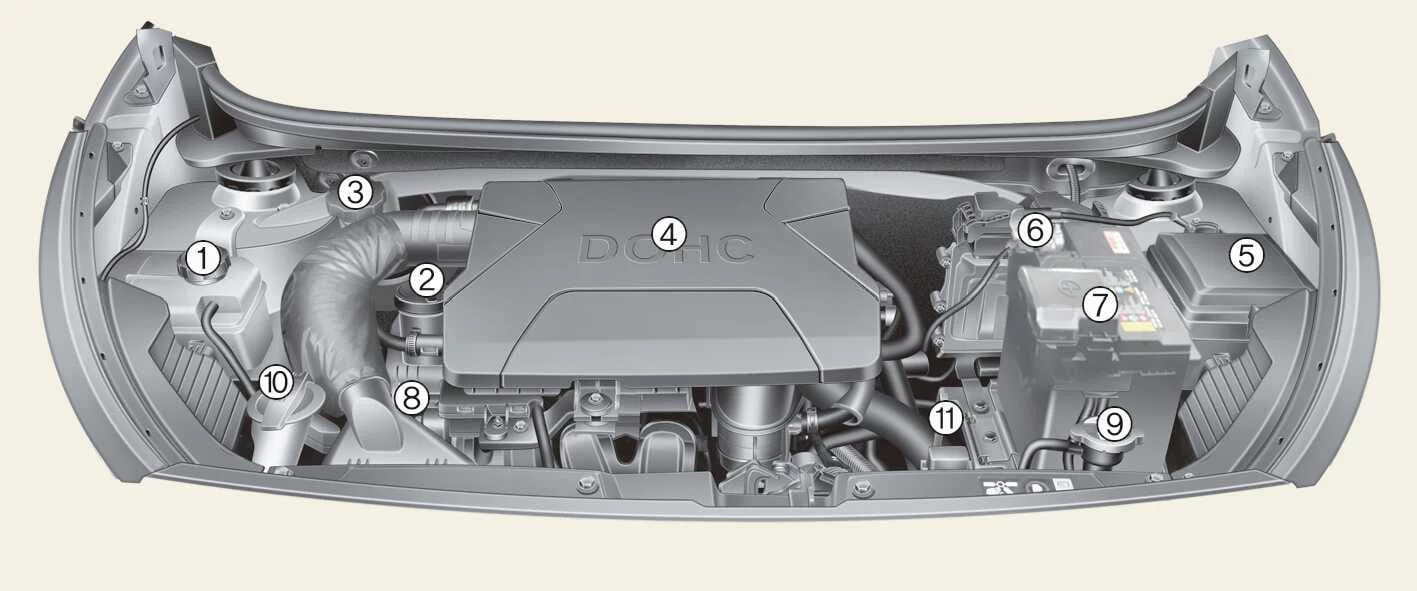
Figure 2. (Petrol) 1.2 MPI
The illustrations help you locate the main maintenance components in the Kia Picanto engine compartment. The arrangement and appearance of the equipment in your vehicle may differ, so use the diagram that corresponds to your engine and refer to the relevant maintenance instructions before carrying out any work.
-
Engine coolant reservoir: Refer to the engine coolant section for information about checking the coolant and maintaining the cooling system.
-
Engine oil filler cap: See the engine oil section for the correct procedure when adding oil.
-
Brake/clutch fluid reservoir: Consult the brake/clutch fluid section for fluid level inspection and maintenance guidance.
-
Air cleaner: Refer to the air cleaner instructions for the petrol 1.0 MPI, 1.0 FFV and 1.2 MPI engines, selecting the procedure applicable to your vehicle.
-
Fuse box: See the fuses section for fuse identification and the appropriate inspection or replacement procedure.
-
Negative battery terminal: Refer to the battery section for terminal identification and battery maintenance instructions.
-
Positive battery terminal: Consult the battery section before carrying out work involving this terminal.
-
Engine oil dipstick: Follow the engine oil instructions to check the oil level correctly.
-
Radiator cap: Refer to the coolant level checking procedure for instructions concerning this part of the cooling system.
-
Windscreen washer fluid reservoir: See the washer fluid section for checking and replenishing the fluid supply.
-
Automatic transmission fluid dipstick: Where fitted, refer to the automatic transmission fluid section for the applicable checking procedure.
Figure 3. Smartstream G1.0
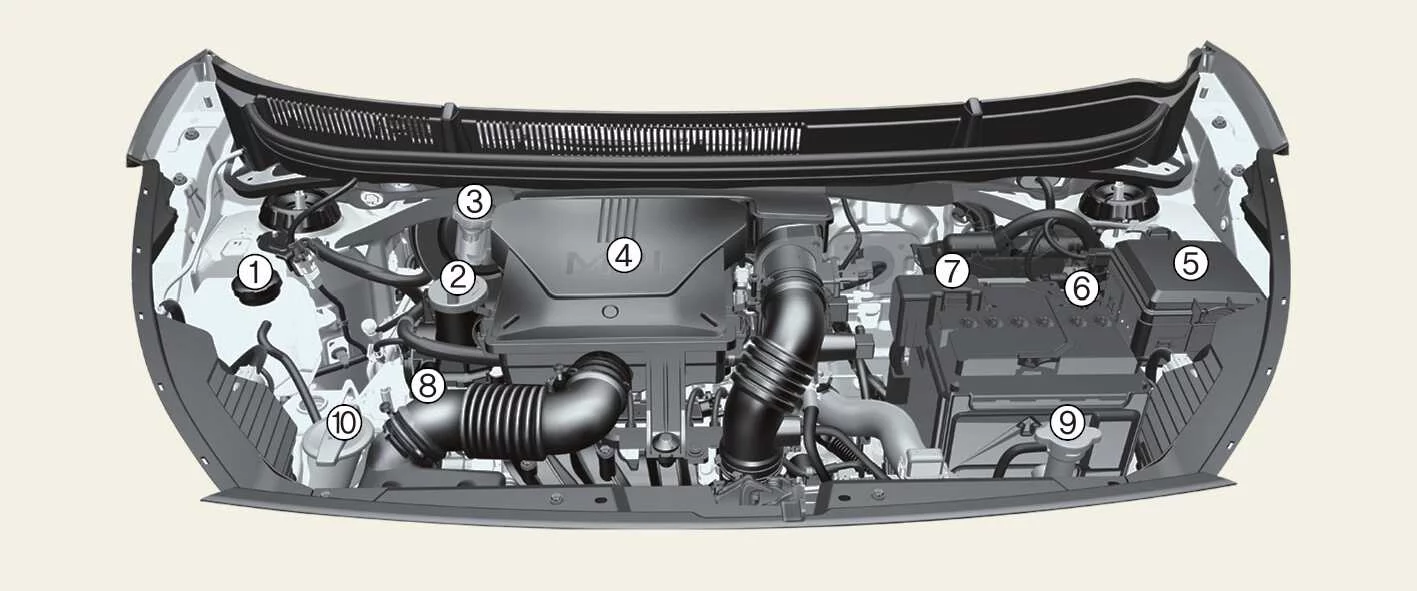
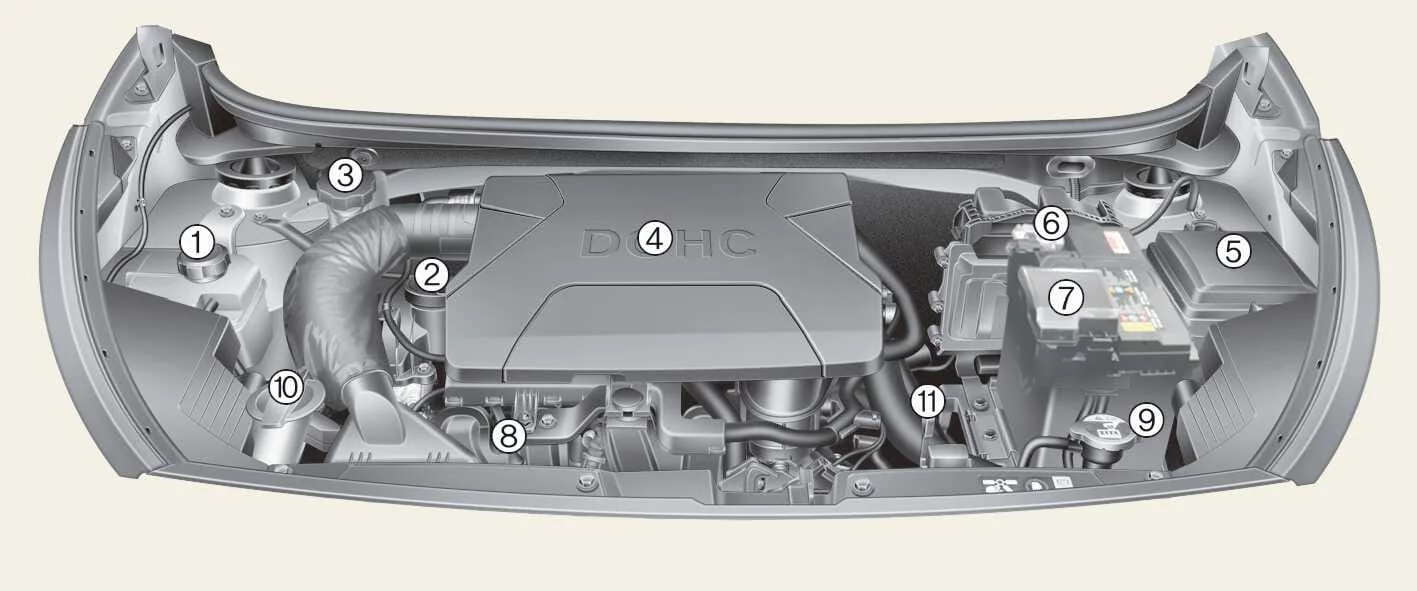
Figure 4. Smartstream G1.2
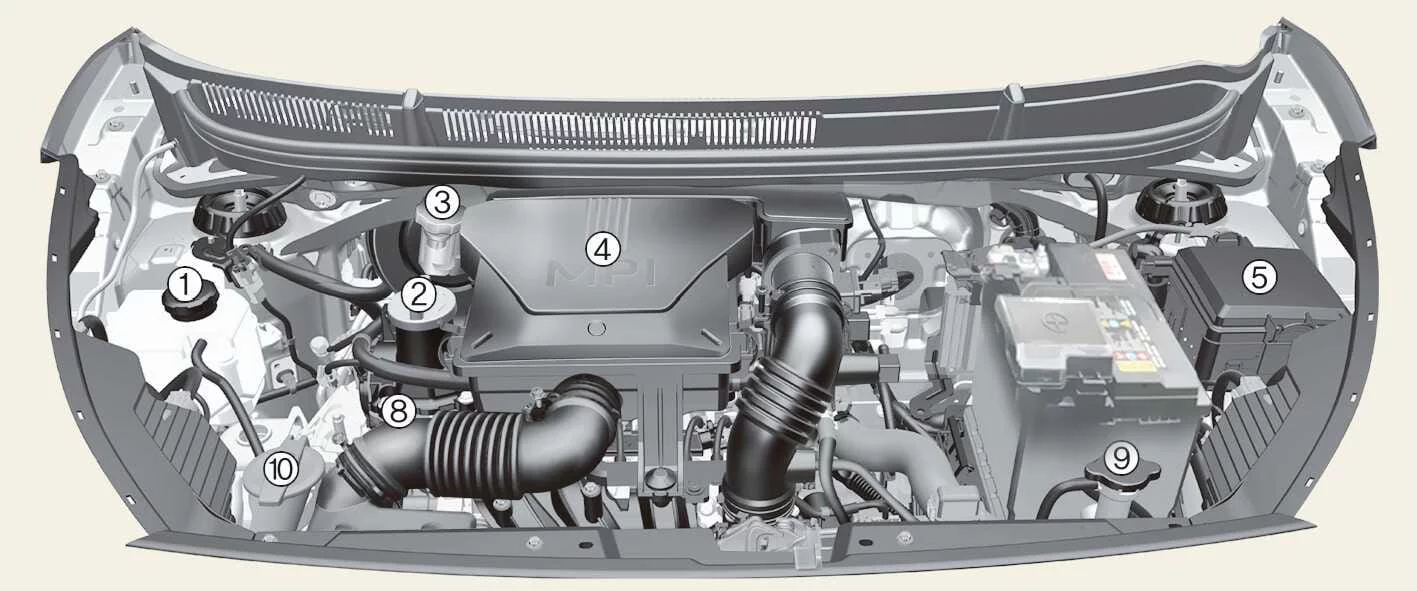
Figure 5. Smartstream G1.0 GDi
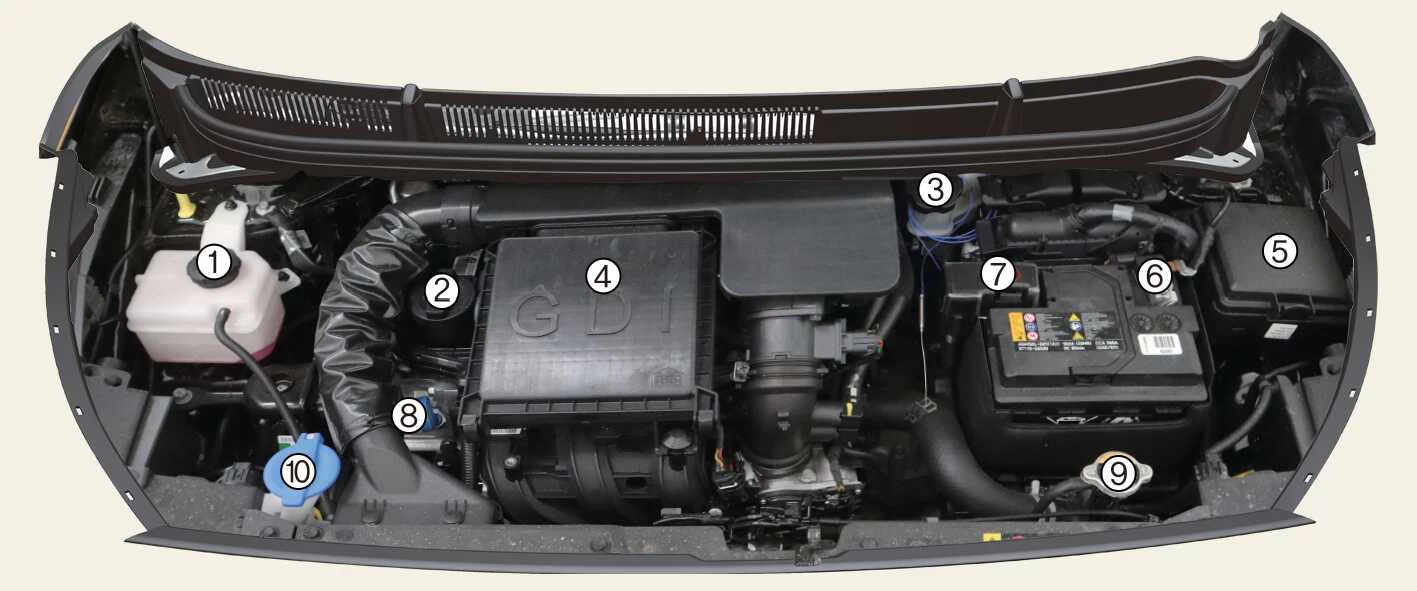
These illustrations show the engine compartment layouts for the listed Smartstream engines. The actual arrangement in your Kia Picanto may differ from the drawings. Match the illustration to your engine before identifying a component, and follow the corresponding maintenance procedure.
-
Engine coolant reservoir: See the engine coolant section for instructions on checking the coolant supply.
-
Engine oil filler cap: Refer to the engine oil section before replenishing the engine oil.
-
Brake/clutch fluid reservoir: Consult the brake/clutch fluid instructions for level checks and maintenance information.
-
Air cleaner: Use the air cleaner section applicable to your engine. The manual includes instructions for petrol 1.0 MPI, 1.0 FFV and 1.2 MPI engines, as well as Smartstream G1.0 and G1.2 engines.
-
Fuse box: Refer to the fuses section to identify the relevant fuse and its replacement procedure.
-
Negative battery terminal: See the battery section for information about the negative connection and battery care.
-
Positive battery terminal: Refer to the battery instructions before working with the positive connection.
-
Engine oil dipstick: Consult the engine oil section for the correct method of checking the oil level.
-
Radiator cap: Follow the instructions in the coolant level checking section when inspecting the cooling system.
-
Windscreen washer fluid reservoir: Refer to the washer fluid section for inspection and filling instructions.
Figure 6. (Petrol) 1.0 FFV
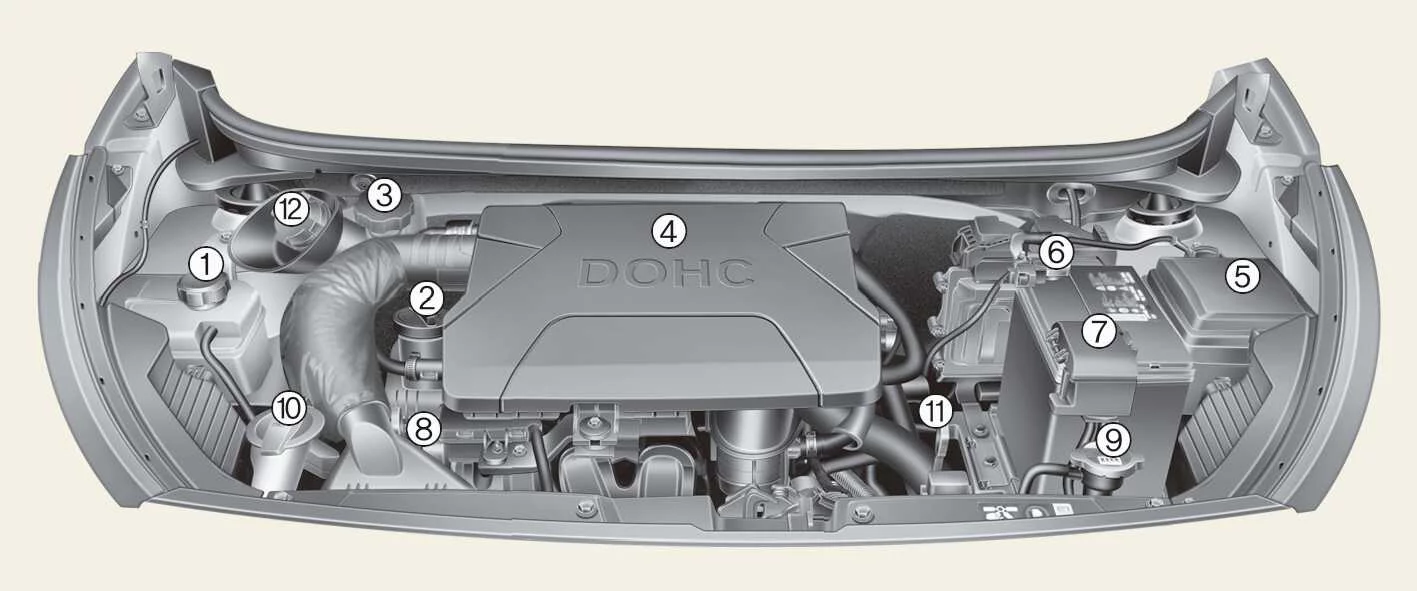
The illustration identifies the main components in the petrol 1.0 FFV engine compartment. Your vehicle’s actual layout may differ from the drawing, particularly where equipment varies by market. Use the numbered list to identify each component and consult its maintenance section for detailed instructions.
-
Engine coolant reservoir: Refer to the engine coolant section for coolant inspection and maintenance guidance.
-
Engine oil filler cap: See the engine oil instructions for the correct filling procedure.
-
Brake/clutch fluid reservoir: Consult the brake/clutch fluid section for checking the fluid level.
-
Air cleaner: Refer to the air cleaner instructions covering the petrol 1.0 MPI, 1.0 FFV and 1.2 MPI engines, using the information applicable to the FFV version.
-
Fuse box: See the fuses section for identification, inspection and replacement instructions.
-
Negative battery terminal: Refer to the battery section for connection details and maintenance guidance.
-
Positive battery terminal: Consult the battery instructions before carrying out work involving this connection.
-
Engine oil dipstick: Follow the engine oil checking procedure to assess the oil level.
-
Radiator cap: Refer to the engine coolant section for the relevant cooling system instructions.
-
Windscreen washer fluid reservoir: See the washer fluid section for checking and replenishing the reservoir.
-
Automatic transmission fluid dipstick: Where fitted, use the checking procedure described in the automatic transmission fluid section.
-
Petrol reservoir: For flex-fuel vehicles supplied in Brazil and Paraguay, refer to the section covering the petrol reservoir in the engine compartment.
 Instrument panel overview
Use this diagram to locate the main instruments, dashboard controls and centre console features. The appearance and
equipment of your Kia Picanto may differ from the illustration; refer to th..

Other information:
Ford Explorer 2020-2026 Service Manual: Removal and Installation - Second Row Easy Entry Power Release Actuator
Removal NOTE: LH rear seat shown, RH rear seat similar. NOTE: Removal steps in this procedure may include installation details. Remove the second row single seat backrest cover. Refer to: Second Row Single Seat Backrest Cover - Vehicles With: Second Row Captain Chairs (501-10B Second Row Seats, Removal and Installation)...
Ford Explorer 2020-2026 Service Manual: General Procedures - Differential Fluid Level Check
Materials Name Specification Motorcraft® SAE 75W-140 Synthetic Rear Axle LubricantXY-75W140-QL WSL-M2C192-A Check With the vehicle in NEUTRAL, position it on a hoist. Refer to: Jacking and Lifting - Overview (100-02 Jacking and Lifting, Description and Operation)...
Categories
- Manuals Home
- 6th Generation Explorer Owners Manual
- 6th Generation Explorer Service Manual
- Driveline
- Automatic Transmission
- Engine - 2.3L EcoBoost (201kW/273PS)
- New on site
- Most important about car
Locking and Unlocking
You can use the power door lock control or the remote control to lock and unlock your vehicle.
Power Door Locks
The power door lock control is on the driver and front passenger door panels.