
Kia Picanto: Opening and closing / Bonnet
Opening the bonnet
-
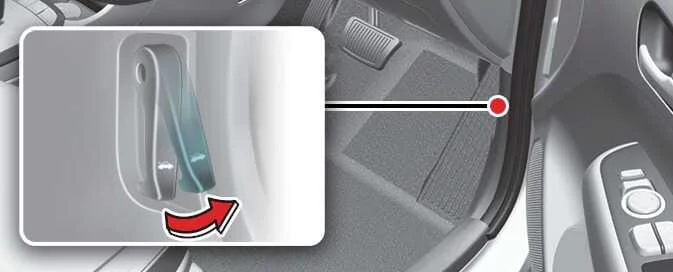
Pull the bonnet release lever to disengage the primary latch. The bonnet should rise slightly, allowing access to the secondary release at the front of the vehicle.
WARNING
Before opening the bonnet, park on a level surface, switch off the engine and apply the parking brake. Select P (Park) for an automatic transmission, N (Neutral) for an automated manual transmission, or 1st gear or R (Reverse) for a manual transmission. Complete these preparations before releasing the bonnet.
-
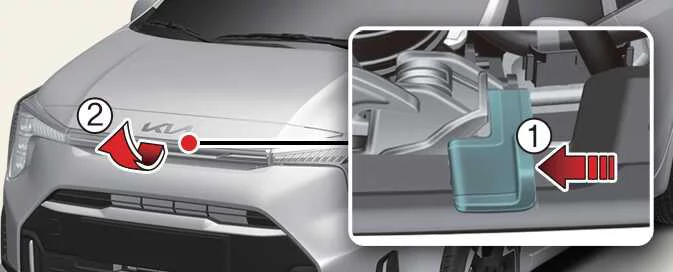
Move to the front of the vehicle and lift the bonnet slightly. Push the secondary release lever (1), located beneath the centre of the bonnet, then raise the bonnet (2).
-
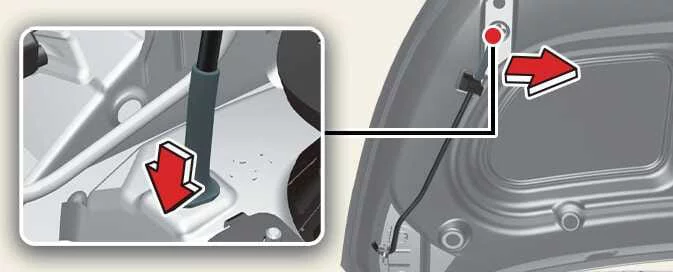
Pull the support rod free from its stored position on the bonnet while keeping the bonnet supported.
-
Position the support rod securely in its designated support hole to hold the bonnet open before inspecting the engine compartment.
WARNING
Hot parts
Grip the support rod only at the section covered by the yellow cap.
When the engine is hot, the metal rod may also be hot. The capped section helps protect your hand from burns when positioning the support.
Bonnet open warning: (if equipped)

|
Where fitted, the bonnet-open warning appears on the instrument cluster LCD display when the bonnet is open. Use this indication as a prompt to check its position and latch engagement.
A warning chime sounds if the vehicle is driven with the bonnet open. Make sure the bonnet is securely closed before moving your Kia Picanto.
Closing the bonnet
-
Before lowering the bonnet, inspect the engine compartment and complete the following checks:
-
Confirm that every filler cap in the engine compartment has been correctly refitted and secured.
-
Remove gloves, cleaning rags and any other combustible materials from the engine compartment. Do not leave items behind after an inspection or maintenance task.
-
-
Return the support rod to its retaining clip and secure it properly to prevent rattling.
-
Lower the bonnet to approximately 30 cm (12 inches) above its closed position, then release it and allow it to drop into the latch. Make sure it locks into place.
-
Check that the bonnet is firmly engaged. If it can be lifted slightly, it has not latched correctly.
Open it again and repeat the closing procedure with a little more force, then recheck the latch before driving.
WARNING
-
Clear all obstructions from the bonnet opening before closing it. Trapping an object or part of the body beneath the bonnet can cause property damage or severe personal injury.
-
Never leave gloves, rags or other combustible materials in the engine compartment. Heat from the engine and surrounding components can ignite these items and cause a fire.
WARNING
-
Always double-check that the bonnet is securely latched before driving away. An unsecured bonnet can fly open while the vehicle is moving, completely obstructing the driver’s view and potentially causing an accident.
-
Whenever you inspect the engine compartment, insert the support rod fully into its designated support hole. Correct engagement helps prevent the bonnet from falling and causing injury.
-
Do not move the vehicle with the bonnet raised. It obstructs the driver’s view and may fall or become damaged as the vehicle moves.
 Manual windows
Turn the window regulator handle clockwise or anticlockwise to raise or lower the glass...

Other information:
Kia Picanto 2024-2026 Owner's Manual: Before driving
Before entering vehicle Check that all windows, outside mirrors and exterior lights are clean, allowing clear visibility and effective lighting. Inspect the tyres and check their condition before setting off...
Ford Explorer 2020-2026 Owners Manual: Instrument Lighting Dimmer & Headlamp Exit Delay
Instrument Lighting Dimmer The instrument lighting dimmer buttons are on the lighting control. Repeatedly press one of the buttons to adjust the brightness. Headlamp Exit Delay After you switch the ignition off, you can switch the headlamps on by pulling the direction indicator lever toward you...
Categories
- Manuals Home
- 6th Generation Explorer Owners Manual
- 6th Generation Explorer Service Manual
- Traction Control
- Automatic Transmission
- General Procedures - Transmission Fluid Drain and Refill
- New on site
- Most important about car
Child Safety Locks
When these locks are set, you cannot open the rear doors from the inside.
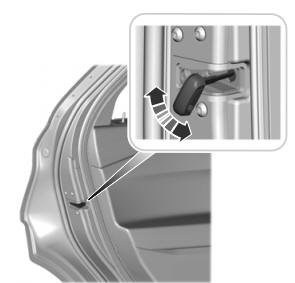
A child safety lock is on the rear edge of each rear door. You must set the child safety lock separately on each door.
Left-Hand Side
