
Ford Explorer: Vehicle Care / Waxing
Regular waxing is necessary to protect your car's paint from the elements. We recommend that you wash and wax the painted surface once or twice a year.
When washing and waxing, park your vehicle in a shaded area out of direct sunlight. Always wash your vehicle before applying wax.
- Use a quality wax that does not contain abrasives.
- Follow the manufacturer’s instructions to apply and remove the wax.
- Apply a small amount of wax in a back-and-forth motion, not in circles.
- Do not allow wax to come in contact with any non-body (low-gloss black)
colored trim. The wax will discolor or stain the parts over time.
- Roof racks.
- Bumpers.
- Grained door handles.
- Side moldings.
- Mirror housings.
- Windshield cowl area.
- Do not apply wax to glass areas.
- After waxing, your car's paint should feel smooth, and be free of streaks and smudges.
 Cleaning the Exterior
Wash your vehicle regularly with cool or lukewarm water and a neutral pH shampoo,
we recommend Motorcraft Detail Wash.
Never use strong household detergents or soap, for example dish washing
..
 Cleaning the Engine
Engines are more efficient when they are clean because grease and dirt buildup
keep the engine warmer than normal.
When washing:
Take care when using a power washer to clean the engine...
Other information:
Ford Explorer 2020-2026 Service Manual: Removal and Installation - Parking Brake Actuator Motor
Removal NOTE: Removal steps in this procedure may contain installation details. NOTE: LH side shown, RH similar. With the vehicle in NEUTRAL, position it on a hoist. Refer to: Jacking and Lifting - Overview (100-02 Jacking and Lifting, Description and Operation)...
Ford Explorer 2020-2026 Service Manual: General Procedures - Brake Disc Machining
Repair NOTE: On-Vehicle Brake Lathe Training Videos Vehicle preparation. Click here to view a video version of this procedure. Mounting the machine. Click here to view a video version of this procedure...
Categories
- Manuals Home
- 6th Generation Explorer Owners Manual
- 6th Generation Explorer Service Manual
- Automatic Transmission
- Engine - 2.3L EcoBoost (201kW/273PS)
- Auxiliary Power Points
- New on site
- Most important about car
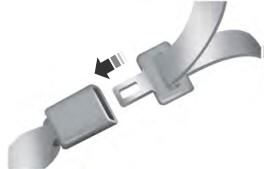
Fastening the Seatbelts
The front outboard and rear safety restraints in the vehicle are combination lap and shoulder belts.

Copyright © 2026 www.foexplorer.com