Ford Explorer: Automatic Transmission - 10-Speed Automatic Transmission – 10R60 / Diagnosis and Testing - Diagnosis By Symptom
Symptom Chart: Automatic Transmission
Diagnostics in this manual assume a certain skill level and knowledge of Ford-specific diagnostic practices.
REFER to: Diagnostic Methods (100-00 General Information, Description and Operation).
In most circumstances the PCM/ TCM sets a DTC to help guide with diagnostics. Refer to the DTC Chart before using the Symptom Chart. The Condition column lists the vehicle condition. The Action column refers to a pinpoint test. Each pinpoint test lists the possible symptoms and the components that can cause each symptom. The components are listed in order of disassembly.
Symptom Chart
| Customer Symptom | Actions |
| No Engagement - Forward | GO to Pinpoint Test A |
| No Engagement - Reverse | GO to Pinpoint Test B |
| No Engagement - Both Forward and Reverse | GO to Pinpoint Test C |
| Engagement Quality - Forward | GO to Pinpoint Test D |
| Engagement Quality - Reverse | GO to Pinpoint Test E |
| Engagement Quality - Both Forward and Reverse | GO to Pinpoint Test F |
| Engagement Quality - Park | GO to Pinpoint Test G |
| Upshift Quality - Single Gear Affected | GO to Pinpoint Test H |
| Downshift Quality - Single Gear Affected | GO to Pinpoint Test I |
| Upshift Quality - Multiple Gears Affected | GO to Pinpoint Test J |
| Downshift Quality - Multiple Gears Affected | GO to Pinpoint Test J |
| Torque Converter Clutch Operation | GO to Pinpoint Test K |
| Transmission Fluid Contaminated, Leaking, Overheating | GO to Pinpoint Test L |
| Noise, Vibration, Harshness | GO to Pinpoint Test M |
| Other Concerns | GO to Pinpoint Test N |
Pinpoint Tests
.jpg) PINPOINT TEST A : NO ENGAGEMENT - FORWARD
PINPOINT TEST A : NO ENGAGEMENT - FORWARD.jpg) PINPOINT TEST A : NO ENGAGEMENT - FORWARD
PINPOINT TEST A : NO ENGAGEMENT - FORWARD|
Normal Operation and Fault Conditions
Possible Sources
|
| Diagnostic steps are not provided for this symptom or DTC. REFER to: Diagnostic Methods (100-00 General Information, Description and Operation). |
PINPOINT TEST B : NO ENGAGEMENT - REVERSE|
Normal Operation and Fault Conditions
Possible Sources
|
| Diagnostic steps are not provided for this symptom or DTC. REFER to: Diagnostic Methods (100-00 General Information, Description and Operation). |
PINPOINT TEST C : NO ENGAGEMENT - BOTH FORWARD AND REVERSE|
Normal Operation and Fault Conditions
Possible Sources
|
| Diagnostic steps are not provided for this symptom or DTC. REFER to: Diagnostic Methods (100-00 General Information, Description and Operation). |
PINPOINT TEST D : ENGAGEMENT QUALITY - FORWARD|
Normal Operation and Fault Conditions
Possible Sources
|
| Diagnostic steps are not provided for this symptom or DTC. REFER to: Diagnostic Methods (100-00 General Information, Description and Operation). |
PINPOINT TEST E : ENGAGEMENT QUALITY - REVERSE|
Normal Operation and Fault Conditions
Possible Sources
|
| Diagnostic steps are not provided for this symptom or DTC. REFER to: Diagnostic Methods (100-00 General Information, Description and Operation). |
PINPOINT TEST F : ENGAGEMENT QUALITY - BOTH FORWARD AND REVERSE|
Normal Operation and Fault Conditions
Possible Sources
|
| Diagnostic steps are not provided for this symptom or DTC. REFER to: Diagnostic Methods (100-00 General Information, Description and Operation). |
PINPOINT TEST G : ENGAGEMENT QUALITY - PARK|
Normal Operation and Fault Conditions
Possible Sources
|
| Diagnostic steps are not provided for this symptom or DTC. REFER to: Diagnostic Methods (100-00 General Information, Description and Operation). |
PINPOINT TEST H : UPSHIFT QUALITY - SINGLE GEAR AFFECTED|
Normal Operation and Fault Conditions
Possible Sources
|
| Diagnostic steps are not provided for this symptom or DTC. REFER to: Diagnostic Methods (100-00 General Information, Description and Operation). |
PINPOINT TEST I : DOWNSHIFT QUALITY - SINGLE GEAR AFFECTED|
Normal Operation and Fault Conditions
Possible Sources
|
| Diagnostic steps are not provided for this symptom or DTC. REFER to: Diagnostic Methods (100-00 General Information, Description and Operation). |
PINPOINT TEST J : SHIFT QUALITY - MULTIPLE GEARS AFFECTED|
Normal Operation and Fault Conditions
Possible Sources
|
| Diagnostic steps are not provided for this symptom or DTC. REFER to: Diagnostic Methods (100-00 General Information, Description and Operation). |
PINPOINT TEST K : TORQUE CONVERTER CLUTCH OPERATION|
Normal Operation and Fault Conditions
Possible Sources
|
| Diagnostic steps are not provided for this symptom or DTC. REFER to: Diagnostic Methods (100-00 General Information, Description and Operation). |
PINPOINT TEST L : TRANSMISSION FLUID CONTAMINATED, LEAKING, OVERHEATING|
Normal Operation and Fault Conditions
Possible Sources
|
| Diagnostic steps are not provided for this symptom or DTC. REFER to: Diagnostic Methods (100-00 General Information, Description and Operation). |
PINPOINT TEST M : NOISE, VIBRATION, HARSHNESS|
Normal Operation and Fault Conditions
Possible Sources
|
| Diagnostic steps are not provided for this symptom or DTC. REFER to: Diagnostic Methods (100-00 General Information, Description and Operation). |
PINPOINT TEST N : OTHER CONCERNS|
Normal Operation and Fault Conditions
Possible Sources
|
| Diagnostic steps are not provided for this symptom or DTC. REFER to: Diagnostic Methods (100-00 General Information, Description and Operation). |
 Diagnosis and Testing - DTC Chart and Pinpoint Tests - 2.3L EcoBoost (201kW/273PS)
Diagnostic Trouble Code (DTC) Chart
Diagnostics in this manual assume a certain skill level and knowledge of Ford-specific diagnostic practices. REFER to: Diagnostic Methods (100-00 General Informati..
 Diagnosis and Testing - Special Testing Procedures
Line Pressure Test
This test verifies the line pressure is within specification.
If available, refer to the Transmission Line Pressure Test general procedure to access the line pressure ..
Other information:
Ford Explorer 2020-2026 Service Manual: Removal and Installation - Roof Opening Panel Shield
Special Tool(s) / General Equipment Interior Trim Remover Removal NOTE: Removal steps in this procedure may contain installation details. Refer to: Roof Opening Panel Fixed Glass (501-17 Roof Opening Panel, Removal and Installation)...
Ford Explorer 2020-2026 Owners Manual: Cleaning the Wheels
Regularly clean them with a wheel cleaner. We recommend that you use Ford approved wheel cleaner if available. Remove dirt and brake dust with a sponge. Remove tar and grease with a bug and tar remover. We recommend that you use Ford approved bug and tar remover if available...
Categories
- Manuals Home
- 6th Generation Explorer Owners Manual
- 6th Generation Explorer Service Manual
- Body and Paint
- Traction Control
- Automatic Transmission - 10-Speed Automatic Transmission – 10R60
- New on site
- Most important about car
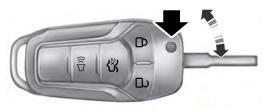
Integrated Keyhead Transmitter (If Equipped)
Use the key blade to start your vehicle and unlock or lock the driver door from outside your vehicle. The integrated keyhead transmitter functions as a programmed ignition key that operates all the locks and starts your vehicle, as well as a remote control.