Kia Picanto: Driver Adjustments / Steering wheel
Motor Driven Power Steering : (if equipped)
Motor Driven Power Steering (MDPS) uses an electric motor to assist your steering movements and reduce the effort needed to turn the wheel. If the engine is switched off or the assistance system becomes inoperative, you can still steer the vehicle, but turning the wheel will require greater physical effort.
The power steering control unit manages this assistance by monitoring steering wheel torque, steering wheel position and vehicle speed. It uses these inputs to control the motor and determine the assistance provided during steering.
The steering feels firmer as vehicle speed increases and lighter as speed decreases. This variation helps provide appropriate steering control at higher speeds while reducing the effort required during low-speed manoeuvres.
If the effort needed to steer your Kia Picanto changes during normal driving, have the system checked by a professional workshop. Kia recommends visiting an authorised Kia dealer or service partner to investigate the change.
NOTE
The following list describes sounds and changes in steering feel that may occur during operation, together with warning indications that require inspection. Pay attention to whether a change is temporary, whether a warning light appears and whether normal assistance returns:
-
During normal operation, the MDPS warning light remains off when no system warning is being indicated.
-
The steering may feel heavier immediately after the ignition switch or ENGINE START/STOP button is switched on. This occurs while the MDPS performs its diagnostic checks. Normal steering assistance returns when those checks are complete.
-
A clicking sound may come from the MDPS relay after the ignition switch is turned to ON or LOCK, or after the ENGINE START/STOP button is switched to ON or OFF. This sound may accompany the system changing its operating state.
-
The steering motor may be audible when the vehicle is stationary or moving slowly. Motor noise in these circumstances can occur during normal operation.
-
If an abnormal condition is detected in the MDPS system, steering assistance will stop as a protective response intended to reduce the risk of a serious accident. The warning light illuminates or flashes on the instrument cluster, and the wheel may become difficult to turn or control. Move the vehicle to a safe location and have it inspected immediately.
-
If the Motor Driven Power Steering system is not functioning correctly, its warning light illuminates on the instrument cluster. Steering may become unusually heavy or otherwise abnormal. Have the system inspected by a professional workshop; Kia recommends an authorised Kia dealer or service partner.
-
Continuously turning the steering wheel while the vehicle is stationary can temporarily increase steering effort. The steering should return to its normal condition after a few minutes.
-
Operating the steering wheel in low temperatures may produce an unusual noise. If the noise disappears as the temperature rises, this is considered a normal temperature-related operating condition.
-
If the charging system warning light comes on or electrical voltage is low, steering effort may increase and operation may become abnormal. A malfunctioning alternator or battery can affect the electrical supply, making the steering wheel heavier and more difficult to control.
Tilt steering : (if equipped)
The tilt-adjustable steering wheel allows you to set a suitable steering angle before driving your Kia Picanto. Make the adjustment while the vehicle is stationary so you can check your driving position without distraction.
You can also raise the steering wheel to create more room for your legs when entering or leaving the vehicle. Return it to your preferred driving position before setting off.
Position the wheel so that you can steer comfortably while maintaining a clear view of the instrument panel gauges and warning lights. The selected angle should support both comfortable operation and easy monitoring of vehicle information.
WARNING
-
Never adjust the steering wheel angle while driving. Releasing or moving the wheel during travel can cause a loss of steering control and an accident resulting in severe injury or death.
-
After completing the adjustment, push the steering wheel upwards and downwards to confirm that it is securely locked. Do not drive until the locking mechanism holds the wheel firmly in position.
|
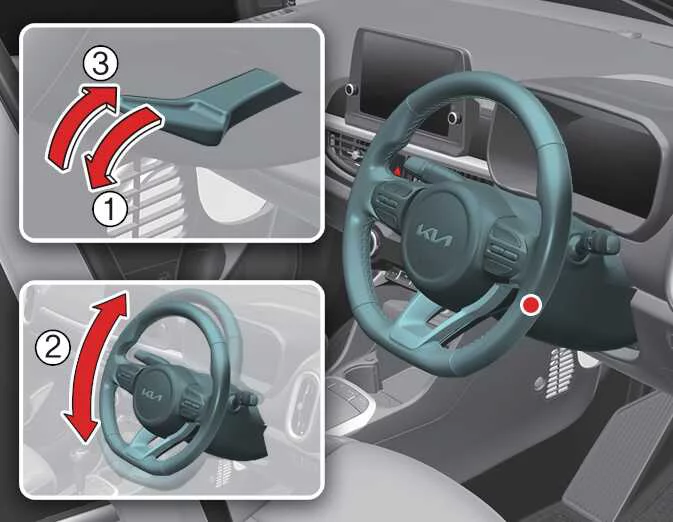
To change the steering wheel angle, pull the lock-release lever down (1), move the wheel to the desired angle (2), then raise the lever to secure it in position (3). Complete the adjustment and check that the wheel is locked before driving.
Steering wheel heater : (if equipped)
|
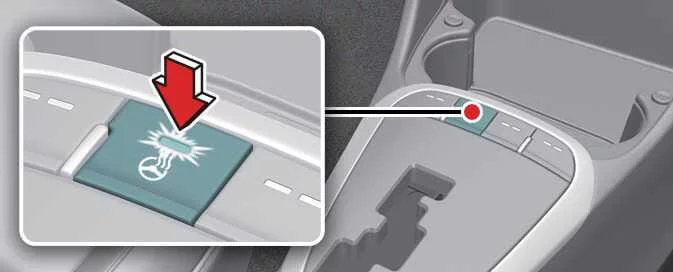
With the ignition switch in the ON position, press the steering wheel heater button to begin warming the wheel. The indicator on the button illuminates to show that heating is active.
Press the button again to switch the heater off manually. The indicator goes out when heating is switched off.
The heater also switches off automatically approximately 30 minutes after activation, so continuous operation does not require you to time the heating period yourself.
If you switch off the ignition before the 30-minute period has elapsed, the heater will be OFF the next time the ignition is turned to ON. It does not automatically resume the previous heating session.
CAUTION
-
Do not attach an auxiliary steering grip or operating handle to the wheel. Such an attachment can damage the steering wheel heating system.
-
Do not clean the heated steering wheel with organic solvents such as paint thinner, benzene, alcohol or petrol. These substances can damage the wheel’s surface.
-
Protect the steering wheel from sharp objects. Damage that cuts or punctures its surface can also damage the heating components beneath it.
Horn
|
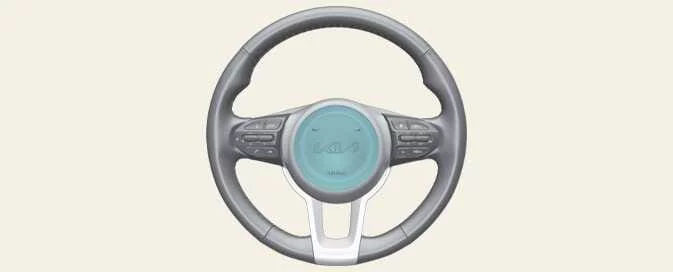
To sound the horn, press the area marked with the horn symbol on the steering wheel. Check the horn regularly to confirm that it operates correctly when needed.
NOTE
The horn responds only when you press the designated area shown in the illustration. Pressing another part of the steering wheel will not operate it.
CAUTION
Use normal hand pressure to operate the horn. Do not strike the horn area forcefully, hit it with your fist or press it with a sharp-pointed object.

 Mirrors
Inside rearview mirror. Day/night rear view mirror
Before driving, adjust the interior rearview mirror so that the view through the rear window is centred in the
mirror...
Other information:
Ford Explorer 2020-2026 Service Manual: General Procedures - Piston Inspection
Inspection NOTE: Do not use a caustic cleaning solution or a wire brush to clean the pistons or damage can occur. Clean and inspect the (1) ring lands, (2) pin bosses, (3) skirts and the (4) tops of the pistons. If wear marks, scores or glazing is found on the piston skirt, check for a bent or twisted connecting rod...
Kia Picanto 2024-2026 Owner's Manual: Towing service. Removable towing hook
Towing service Wheel dollies If the Kia Picanto needs to be towed, Kia recommends using an authorised Kia dealer or a commercial towing service...
Categories
- Manuals Home
- 6th Generation Explorer Owners Manual
- 6th Generation Explorer Service Manual
- Traction Control
- General Service Information
- General Procedures - Brake Service Mode Activation and Deactivation
- New on site
- Most important about car
Fastening the Seatbelts
The front outboard and rear safety restraints in the vehicle are combination lap and shoulder belts.