Kia Picanto: Specifications / Recommended lubricants and capacities. Recommended SAE viscosity number
Using lubricants of the specified quality helps the engine and powertrain in your Kia Picanto deliver their intended performance and durability. The correct lubricant also supports engine efficiency and fuel economy. The table below lists the recommended fluids, capacities and classifications for the engine, transmission and market combinations shown. Match each specification to your vehicle before selecting a product, as requirements can differ even between engines with similar names.
| Lubricant or fluid and applicable specification | Volume (L) | Classification | ||
|---|---|---|---|---|
|
Engine oil — drain and refill [1] 
|
Smartstream G1.0 | Markets other than the Middle East, Iran, Morocco, Algeria, Tunisia, Libya, Egypt and Sudan | 3.1 | SAE 0W-20, API SN PLUS/SP or ILSAC GF-6 |
| Middle East, Iran, Morocco, Algeria, Tunisia, Libya, Egypt and Sudan | SAE 5W-30, ACEA A5/B5 | |||
| Smartstream G1.2 | Markets other than the Middle East, Iran, Morocco, Algeria, Tunisia, Libya, Egypt and Sudan | 3.4 | SAE 0W-20, API SN PLUS/SP or ILSAC GF-6 [2] | |
| Middle East, Iran, Morocco, Algeria, Tunisia, Libya, Egypt and Sudan | SAE 5W-30, ACEA A5/B5 [3] | |||
| Smartstream G1.0 GDi | Markets other than the Middle East, Iran, Morocco, Algeria, Tunisia, Libya, Egypt and Sudan | 3.4 | SAE 0W-20, API SN PLUS/SP or ILSAC GF-6 [2] | |
| Middle East, Iran, Morocco, Algeria, Tunisia, Libya, Egypt and Sudan | SAE 5W-30, ACEA A5/B5 [3] | |||
| (Petrol) 1.0 MPI | Markets other than the Middle East, Iran, Morocco, Algeria, Tunisia, Libya, Egypt, Sudan, India, Central America and South America | 2.9 | SAE 0W-20, latest API specification (latest ILSAC specification) or ACEA C5 | |
| Middle East, Iran, Morocco, Algeria, Tunisia, Libya, Egypt and Sudan | SAE 5W-30, ACEA A5/B5 | |||
| India, Central America and South America | SAE 0W-20, latest API specification (latest ILSAC specification) | |||
| (Petrol) 1.0 MPI FFV | Brazil | 2.9 | SAE 0W-20 or 5W-20, latest API specification (latest ILSAC specification) or ACEA C2 [7] | |
| (Petrol) 1.2 MPI | Markets other than the Middle East, Iran, Morocco, Algeria, Tunisia, Libya, Egypt, Sudan, Central America, South America and China | 3.5 | SAE 0W-20, latest API specification (latest ILSAC specification) or ACEA C5 [4] | |
| Middle East, Iran, Morocco, Algeria, Tunisia, Libya, Egypt and Sudan | SAE 5W-30, ACEA A5/B5 [5] | |||
| Central America and South America | SAE 5W-20, ACEA A5/B5 [5] | |||
| China | SAE 5W-20, latest API specification (latest ILSAC specification) [6] | |||
| Manual transmission (MT) fluid |
(Petrol) 1.0 MPI (Petrol) 1.0 MPI FFV (Petrol) 1.2 MPI |
1.3–1.4 |
SAE 70W, API GL-4 Listed products: HK SYN MTF 70W (SK); SPIRAX S6 GHME 70W MTF (H.K. SHELL); GS MTF HD 70W (GS CALTEX); Kia Genuine MTF&DCTF 70W Synthetic. |
|
| Smartstream G1.0 | ||||
| Smartstream G1.2 | ||||
| Smartstream G1.0 GDi | ||||
| Automated manual transmission (AMT) fluid [8] | Smartstream G1.0 | 1.3–1.4 |
SAE 70W, API GL-4 Listed products: HK SYN MTF 70W (SK); SPIRAX S6 GHME 70W MTF (H.K. SHELL); GS MTF HD 70W (GS CALTEX); Kia Genuine MTF&DCTF 70W Synthetic. |
|
| Smartstream G1.2 | ||||
| Smartstream G1.0 GDi | ||||
| Automatic transmission (AT) fluid [8] |
(Petrol) 1.0 MPI (Petrol) 1.0 MPI FFV |
5.7 | SK ATF SP-III, MICHANG ATF SP-III or Kia Genuine ATF SP-III | |
| (Petrol) 1.2 MPI | 6.1 | |||
| Smartstream G1.0 | 5.7 | |||
| Coolant |
(Petrol) 1.0 MPI (Petrol) 1.0 MPI FFV |
5.0 | Phosphate-based ethylene glycol coolant | |
| (Petrol) 1.2 MPI | 5.5 | |||
| Smartstream G1.0 | 5.2 | |||
| Smartstream G1.2 | 5.0 | |||
| Smartstream G1.0 GDi | 4.8 | |||
| Brake/clutch fluid [9] | 0.4–0.44 | SAE J1704 DOT-4 LV, ISO 4925 Class 6, FMVSS 116 DOT-4 | ||
| Fuel | 35 | — | ||
| Fuel — flex-fuel vehicle (FFV) | Petrol reservoir | 0.8 | ||
| Alcohol fuel | 38 | |||
[1] Engine oil viscosity: Refer to the “Recommended SAE viscosity number” section when selecting an oil viscosity grade for your Kia Picanto. Use that guidance together with the engine and market requirements listed in the table.
[2] Fully synthetic engine oil requirement: Use fully synthetic oil meeting API SN PLUS or a higher API grade. If a lower-grade oil, including mineral or semi-synthetic oil, is used, both the engine oil and engine oil filter must be replaced according to the maintenance schedule for severe operating conditions.
[3] Fully synthetic engine oil requirement: Use fully synthetic oil meeting API SN PLUS or a higher API grade, or ACEA A5/B5. If a lower-grade oil, including mineral or semi-synthetic oil, is used, follow the severe operating conditions maintenance schedule for replacement of both the engine oil and its filter.
[4] Fully synthetic engine oil requirement: Use fully synthetic oil meeting the latest API specification (latest ILSAC specification) or ACEA C5. If a lower-grade oil, including mineral or semi-synthetic oil, is used, the engine oil and engine oil filter must both be changed at the intervals specified for severe operating conditions.
[5] Fully synthetic engine oil requirement: Use fully synthetic oil meeting the latest API specification (latest ILSAC specification) or ACEA A5/B5. Where a lower-grade oil, including mineral or semi-synthetic oil, is used, replace both the engine oil and engine oil filter in accordance with the severe operating conditions maintenance schedule.
[6] Fully synthetic engine oil requirement: Use fully synthetic oil meeting the latest API specification (latest ILSAC specification). If a lower-grade oil, including mineral or semi-synthetic oil, is used instead, apply the severe operating conditions replacement intervals to both the engine oil and its filter.
[7] Fully synthetic engine oil requirement: Use fully synthetic oil meeting the latest API specification (latest ILSAC specification) or ACEA C2. If a lower-grade oil, including mineral or semi-synthetic oil, is used, both the engine oil and engine oil filter require replacement according to the schedule for severe operating conditions.
[8] Transmission fluid: Using a fluid other than the genuine oil developed for the transmission may cause transmission performance problems. Select the fluid specified for the transmission fitted to your Kia Picanto, taking care to distinguish between manual, automated manual and automatic transmission requirements.
[9] Brake/clutch fluid: To maintain the vehicle’s intended performance, use Kia genuine fluid or a product of an equivalent standard that meets the brake/clutch fluid specifications listed in the table.
Recommended SAE viscosity number
CAUTION
Before checking or draining any lubricant, thoroughly clean the area around the filler plug, drain plug or dipstick you will be using. This is particularly important when your Kia Picanto is driven in dusty or sandy conditions or on unpaved roads. Removing loose dirt and grit before opening a filler or withdrawing a dipstick helps prevent contamination from entering the engine or other mechanisms, where it could cause damage.
Engine oil viscosity, or thickness, influences fuel economy and engine operation in cold weather, including starting and the oil’s ability to circulate. Lower-viscosity oils can improve fuel economy and cold-weather performance, while higher-viscosity oils may be required to provide satisfactory lubrication in hot conditions, as indicated by the applicable recommendation chart. Always select a recommended grade: using an oil viscosity outside the specified recommendations could damage the engine.
NOTE
Do not add supplementary additives to the engine oil. These products can alter the oil’s formulated properties and may cause serious engine failure. Select an oil that meets the specified requirements without attempting to change its characteristics with additional treatments.
Choose an engine oil viscosity that suits the full range of temperatures your vehicle is likely to encounter before its next oil change. Use the chart for the engine and market applicable to your Kia Picanto, rather than selecting a grade solely on the basis of the temperature on the day the oil is changed.
Temperature Range for SAE Viscosity Numbers
Smartstream G1.0/Smartstream G1.2/Smartstream G1.0 GDi
A: Markets other than the Middle East, Iran, Morocco, Algeria, Tunisia, Libya, Egypt and Sudan.
B: Middle East, Iran, Morocco, Algeria, Tunisia, Libya, Egypt and Sudan.

(Petrol) 1.0 MPI/(Petrol) 1.2 MPI
A: Markets other than the Middle East, Iran, Morocco, Algeria, Tunisia, Libya, Egypt and Sudan.
B: Middle East, Iran, Morocco, Algeria, Tunisia, Libya, Egypt and Sudan.
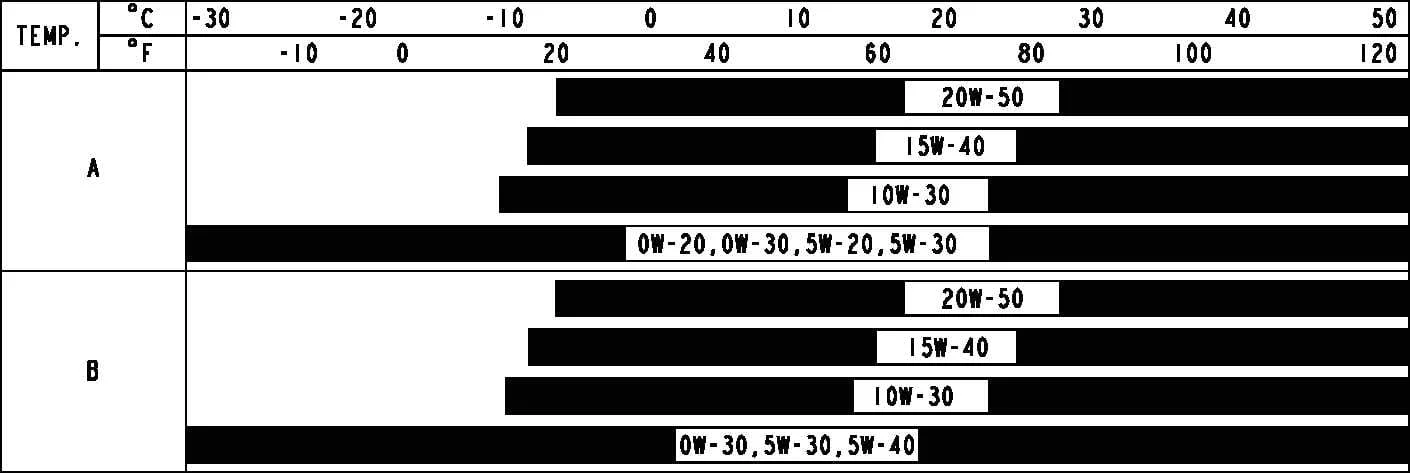
(Petrol) 1.0 MPI FFV
A: Brazil. Use this chart for the listed flex-fuel engine specification supplied to the Brazilian market.

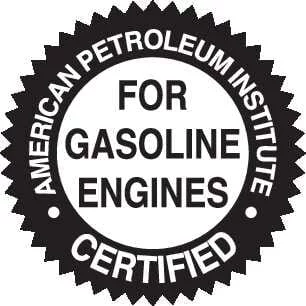 Engine oil carrying this American Petroleum
Institute (API) Certification Mark meets the applicable International Lubricant Specification Advisory Committee
(ILSAC) requirements. Kia recommends using engine oils displaying this mark, together with the viscosity and quality
specifications applicable to your engine.
 Weight/volume. Air conditioning system
Weight/volume
The tables below list gross vehicle weight and luggage capacity for the Kia Picanto specifications shown. Choose the
table for the relevant market, seating configuration, engine and..
 Vehicle identification number (VIN). Vehicle certification label
Vehicle identification number (VIN)
The vehicle identification number, usually abbreviated to VIN, ide..
Other information:
Ford Explorer 2020-2026 Owners Manual: Rear Parking Aid
WARNING: The system may not detect objects with surfaces that absorb reflection. Always drive with due care and attention. Failure to take care may result in a crash. WARNING: The system may not detect small or moving objects, particularly those close to the ground...
Ford Explorer 2020-2026 Service Manual: Removal and Installation - Front Seat Cushion Blower Motor
Removal Raise the front seat to its highest point of travel. Remove the front seat cushion blower motor. Disconnect the electrical connector. Rotate the blower motor 45 degrees clockwise. Installation To install, reverse the removal procedure...
Categories
- Manuals Home
- 6th Generation Explorer Owners Manual
- 6th Generation Explorer Service Manual
- Removal and Installation - All-Wheel Drive (AWD) Module
- Driveline
- Automatic Transmission - 10-Speed Automatic Transmission – 10R60
- New on site
- Most important about car
Locking and Unlocking
You can use the power door lock control or the remote control to lock and unlock your vehicle.
Power Door Locks
The power door lock control is on the driver and front passenger door panels.