Kia Picanto: Special driving conditions / Hazardous driving conditions. Rocking the vehicle
Hazardous driving conditions
Water, snow, ice, mud, sand and similar hazards can reduce grip and make vehicle control more difficult. When driving your Kia Picanto in these conditions, adapt your speed and driving inputs to the surface and follow these precautions:
-
Drive cautiously and leave additional room for braking. Reduced traction can increase the distance needed to bring the vehicle to a stop.
-
Avoid sudden braking and abrupt steering movements. Make changes in speed and direction smoothly to help maintain control.
-
On a vehicle without ABS, use a light pumping action on the brake pedal when braking in these hazardous conditions, applying and releasing it gently until the vehicle stops.
WARNING
ABS
Do not pump the brake pedal on a vehicle equipped with ABS. Maintain steady pedal pressure and allow the anti-lock braking system to regulate the braking force.
-
If the vehicle becomes stuck in snow, mud or sand, use second gear to help pull away. Apply the accelerator gradually and avoid spinning the drive wheels, which can make it harder to regain traction.
-
When the vehicle is stuck on ice, snow or mud, improve traction with sand, rock salt or another suitable non-slip material beneath the drive wheels, or use tyre chains as appropriate.
WARNING
Downshifting
Downshifting an automatic transmission on a slippery surface can cause the tyres to skid because of the sudden change in wheel speed. This may lead to a loss of control and an accident. Exercise particular care when selecting a lower gear on roads with reduced grip.
Rocking the vehicle
If rocking is necessary to free your Kia Picanto from snow, sand or mud, first turn the steering wheel from side to side to clear space around the front wheels. On a manual transmission vehicle, alternate between 1st (First) and R (Reverse). On a vehicle with an automatic or automated manual transmission, alternate between R (Reverse) and a forward gear. Do not race the engine, and keep wheelspin to an absolute minimum. If a few attempts do not free the vehicle, arrange recovery by a tow vehicle rather than continuing to rock it. Repeated attempts can overheat the engine and damage the transmission.
CAUTION
Prolonged rocking can cause engine overheating, transmission damage or failure, and damage to the tyres. Stop the attempt if the vehicle remains stuck after a few tries.
WARNING
Spinning tyres
Avoid spinning the wheels, particularly at indicated speeds above 56 km/h (35 mph). High-speed wheelspin while the vehicle remains stationary can overheat a tyre and cause damage that may injure people nearby. The vehicle’s lack of forward movement does not make rapid wheelspin safe.
NOTE
If fitted, switch Electronic Stability Control (ESC) OFF before attempting to rock the vehicle free.
WARNING
Rocking a vehicle out of snow, mud or sand involves moving it forwards and backwards, and it may suddenly surge in either direction when traction returns. Never attempt this procedure while people or objects are near the vehicle. Keep the surrounding area clear, as an unexpected movement can injure bystanders or damage nearby objects.

 Smooth cornering. Driving at night
Smooth cornering
Avoid braking or changing gear while travelling through a corner, particularly when the road is wet..
Other information:
Ford Explorer 2020-2026 Service Manual: Diagnosis and Testing - Flasher Lighting, Siren and Speaker System
Diagnostic Trouble Code (DTC) Chart Diagnostics in this manual assume a certain skill level and knowledge of Ford-specific diagnostic practices. REFER to: Diagnostic Methods (100-00 General Information, Description and Operation). Diagnostic Trouble Code Chart Module DTC Description Action BCM B12F4:1..
Ford Explorer 2020-2026 Service Manual: General Procedures - Wheel to Tire Runout Minimization
Check NOTE: Road Force® values in illustrations are shown in pounds. NOTE: Match mounting is a technique used to reduce radial runout or road force on wheel and tire assemblies. Excessive runout is a source of ride quality complaints and match mounting can be used to minimize the runout...
Categories
- Manuals Home
- 6th Generation Explorer Owners Manual
- 6th Generation Explorer Service Manual
- Removal and Installation - All-Wheel Drive (AWD) Module
- Body and Paint
- Description and Operation - Jacking and Lifting - Overview
- New on site
- Most important about car
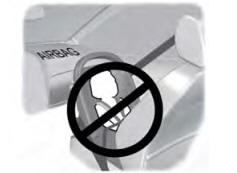
Children and Airbags
WARNING: Airbags can kill or injure a child in a child restraint. Never place a rear-facing child restraint in front of an active airbag. If you must use a forward-facing child restraint in the front seat, move the seat upon which the child restraint is installed all the way back.