Kia Picanto: Brake system / Electronic Stability Control (ESC) : (if equipped)
|
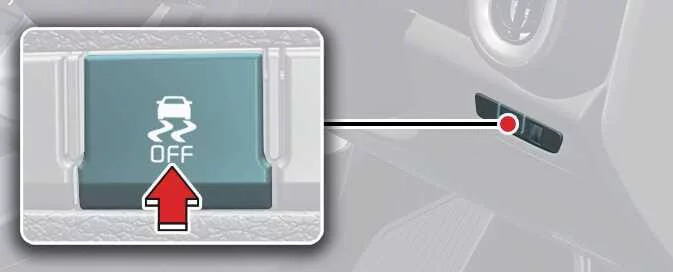
The Electronic Stability Control (ESC) system in your Kia Picanto helps stabilise the vehicle during cornering. It compares the direction you indicate through the steering wheel with the direction the vehicle is actually travelling, helping identify when the two no longer match.
To help restore stability, ESC can apply braking force to individual wheels and adjust engine operation through the engine management system. These interventions work together to help the driver maintain control.
WARNING
Never drive faster than road conditions allow or enter a corner at excessive speed. Electronic Stability Control cannot prevent every accident. Taking turns too quickly, making abrupt manoeuvres or hydroplaning on a wet surface can still lead to a serious collision. Safe, attentive driving remains essential: avoid actions that cause the tyres to lose traction, allow for changing road conditions and maintain a suitable speed. Having ESC fitted does not remove the need to follow normal safe-driving precautions.
ESC is an electronic driving aid intended to help you maintain vehicle control in difficult conditions. It cannot replace sound judgement or safe driving habits. Vehicle speed, the condition of the road and your steering inputs all influence how effectively the system can respond to a developing loss of control. You remain responsible for choosing appropriate driving and cornering speeds and leaving enough safety margin to react to hazards.
When braking in conditions that could cause the wheels to lock, you may hear a repeated ticking sound from the brakes or feel a corresponding pulsation through the brake pedal. These sounds and sensations are normal during active brake control and do not, by themselves, indicate a fault.
NOTE
A clicking sound may come from the engine compartment when the vehicle first moves after the engine has started. This is a normal operating characteristic and indicates that the Electronic Stability Control system is functioning.
 Anti-lock brake system (ABS): (if equipped)
WARNING
ABS and Electronic Stability Control (ESC) cannot prevent accidents caused by unsafe driving or dangerous manoeuvres.
Although these systems can help you maintain control during emergenc..
 ESC operation. Indicator light
ESC operation
ESC ON condition
When the ignition is switched ON, the ESC and ESC OFF indicator lights
illuminate for approximately 3 seconds...
Other information:
Ford Explorer 2020-2026 Service Manual: Removal and Installation - Battery Current Sensor
Removal NOTE: Removal steps in this procedure may contain installation details. Position the rear compartment storage cover upward. Remove the rear compartment filler trim panel. Remove the rear compartment storage/cupholder assembly...
Ford Explorer 2020-2026 Service Manual: General Procedures - Engine Cooling System Draining, Vacuum Filling and Bleeding
Special Tool(s) / General Equipment ROB75240Coolant/Battery Refractometer (Fahrenheit) Fluid Container Cooling System Vacuum Tester and Refiller Draining NOTICE: The coolant must be recovered in a suitable, clean container for reuse...
Categories
- Manuals Home
- 6th Generation Explorer Owners Manual
- 6th Generation Explorer Service Manual
- Driveline
- Fuel Filler Funnel Location & Running Out of Fuel
- General Procedures - Transmission Fluid Drain and Refill
- New on site
- Most important about car
Seatbelt Height Adjustment
WARNING: Position the seatbelt height adjuster so that the seatbelt rests across the middle of your shoulder. Failure to adjust the seatbelt correctly could reduce its effectiveness and increase the risk of injury in a crash.