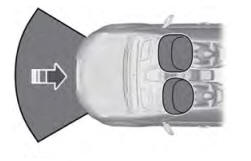
Kia Picanto: Air bag—supplemental restraint system / Airbag non-inflation conditions
|
Airbag non-inflation conditions |
|
|---|---|
|
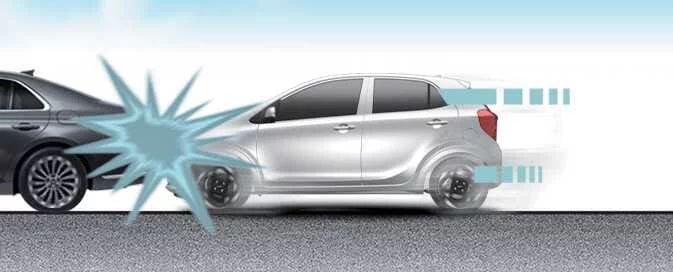
Air bags may remain undeployed in certain low-speed collisions. Deployment depends on whether the impact meets the system’s activation conditions, so a collision does not automatically cause the air bags to inflate. |
|
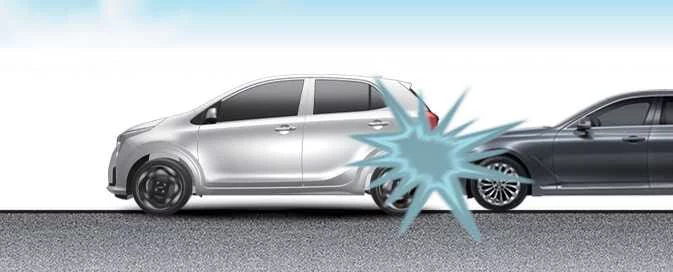
Air bags are not designed to inflate in rear-impact collisions. An impact to the rear of the vehicle therefore does not, by itself, call for air bag deployment. |
|
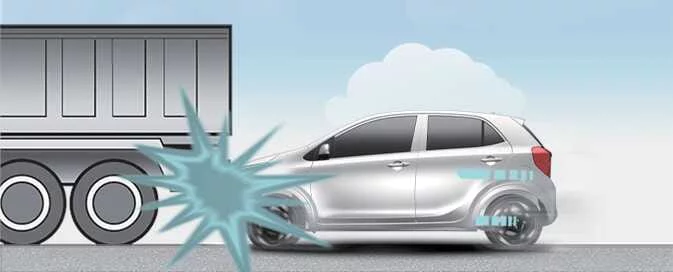
Heavy braking lowers the front of the vehicle. In a collision with a vehicle that has greater ground clearance, this can cause the front of the braking vehicle to slide underneath it. Air bags may not inflate during this type of underride collision because the resulting movement can significantly reduce the deceleration forces detected by the sensors. The sensor readings may therefore remain below the conditions required for deployment. |
|
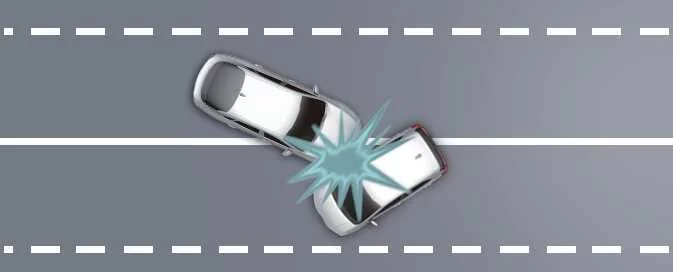
During an angled collision, the impact may move occupants in a direction where the air bags would provide no additional protection. Under these circumstances, the sensor signals may not trigger any air bags. |
|
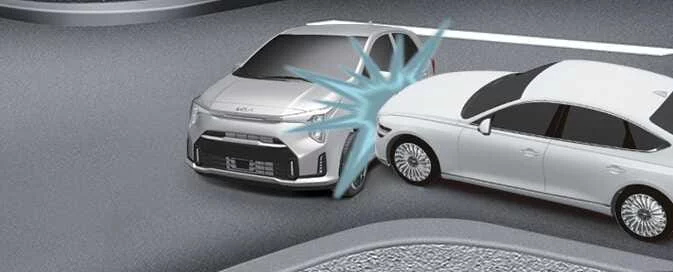
Front air bags may not inflate during a side-impact collision. Their intended deployment conditions differ from those of the side and curtain air bags. |
|
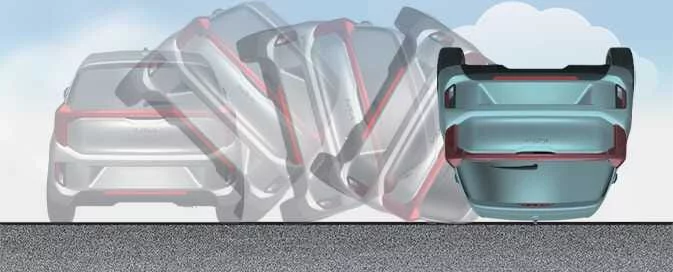
Air bags may not inflate in a rollover if the vehicle cannot detect the rollover. The presence or absence of a rollover sensor affects this operation; see the equipment-specific notes below. |
|
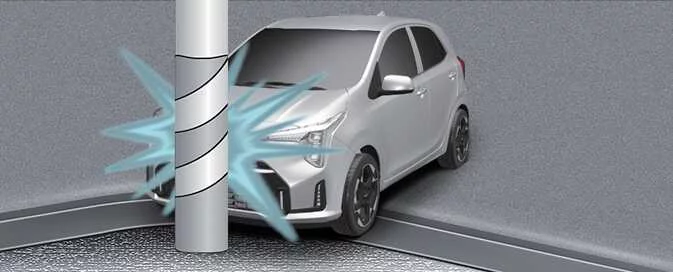
Air bags may not inflate when the vehicle strikes a narrow object such as a utility pole or tree. Because the impact is concentrated in a small area, the full collision force may not reach the sensors in a way that triggers deployment. |
WARNING
-
The Supplemental Restraint System (SRS) in your Kia Picanto is designed to deploy the front air bags only when the impact is sufficiently severe and its angle is less than 30° from the vehicle’s forward longitudinal axis. Both impact severity and direction are relevant to deployment.
-
Front air bags are not intended to inflate in side-impact, rear-impact or rollover crashes. They also will not deploy in frontal collisions that remain below the deployment threshold.
-
Side and curtain air bags deploy only in certain side-impact conditions severe enough to pose a significant injury risk to occupants. Rollover deployment also applies under qualifying conditions when the vehicle is equipped with a rollover sensor.
-
Deactivate the front passenger’s air bag only while the vehicle is switched OFF. Operating the switch at another time may cause an SRS Control Module malfunction. This could prevent the driver’s, front passenger’s, side and/or curtain air bags from deploying, or cause them to deploy incorrectly, during a collision.
-
Air bag deployment may produce a loud noise followed by fine dust inside the passenger compartment. These are normal effects of deployment and do not, by themselves, indicate a hazardous condition.
-
The air bags are packed with a fine powder that can be released during inflation. This dust may irritate the skin or eyes and can aggravate asthma in some people. After an accident in which air bags have deployed, thoroughly wash all exposed skin with cold water and mild soap to remove the residue.
-
Clean air bag pad covers only with a soft, dry cloth or a cloth lightly moistened with plain water. Use gentle wiping rather than applying cleaning chemicals.
-
Solvents and other cleaning products can adversely affect the air bag covers and interfere with correct deployment. Do not use them on these covers.
-
Keep SRS components and wiring away from water and other liquids. Liquid exposure can make the components inoperative and may result in fire or serious injury.
-
Any of the following warning-light conditions indicates an SRS malfunction. Have the system inspected by a professional workshop if one occurs. Kia recommends visiting an authorised Kia dealer/service partner.
-
The SRS air bag warning light does not illuminate briefly when the vehicle is switched ON.
-
The warning light remains illuminated after the initial period of approximately 6 seconds instead of going out.
-
The warning light comes on while the vehicle is moving.
-
The warning light flashes while the vehicle is in the ON position.
-
-
Before replacing a fuse or disconnecting a battery terminal, remove the ignition key or switch off the vehicle using the ENGINE START/STOP button. Never remove or replace an air bag-related fuse while the ignition switch or ENGINE START/STOP button is in the ON position. Failure to follow this instruction will cause the SRS air bag warning light to illuminate.
-
Do not tamper with or disconnect SRS wiring or other system components. This includes adding badges to air bag pad covers or modifying the vehicle’s body structure. Such changes can impair SRS performance and lead to injury. If servicing is necessary, have the work carried out by a professional workshop. Kia recommends visiting an authorised Kia dealer/service partner.
-
If your Kia Picanto has been flooded and the carpets are soaked or water remains on the floor, do not attempt to start the vehicle. Have it inspected by a professional workshop. Kia recommends contacting an authorised Kia dealer/service partner.
-
Air bags are designed for a single deployment and cannot be reused. If they inflate, have the system replaced by a professional workshop. Kia recommends visiting an authorised Kia dealer/service partner.
-
Special safety precautions apply when air bag components are discarded or the vehicle is scrapped. These include the proper removal of SRS components and seat belt pre-tensioners because of the associated fire risk. Failure to follow the required procedures can increase the risk of personal injury. An authorised Kia dealer can explain these precautions and provide the necessary information.
NOTE
-
With rollover sensor
On a Kia Picanto equipped with a rollover sensor, the side and curtain air bags are designed to inflate when that sensor detects a qualifying rollover. Deployment may therefore occur during a rollover when the system detects the relevant conditions.
-
Without rollover sensor
If the vehicle has side and curtain air bags but no rollover sensor, the side and/or curtain air bags may still inflate when a side-impact collision causes the vehicle to roll over. In this situation, deployment can result from the side impact.
 Airbag inflation conditions
The air bags fitted to your Kia Picanto may differ from those shown in the illustrations. The examples below explain
the collision conditions associated with front, side and curtain air bag deplo..
 Adding equipment to or modifying your air bag-equipped vehicle. SRS care
Adding equipment to or modifying your air bag-equipped vehicle
Changes to your Kia Picanto’s frame, bumper system, front end, side body panels or ride height may affect how the air
bag system o..
Other information:
Ford Explorer 2020-2026 Service Manual: Removal and Installation - Rear Window Wiper Pivot Arm
Special Tool(s) / General Equipment Two Leg Puller Removal Open the wiper pivot arm nut cover. Remove the wiper pivot arm nut. Remove the wiper pivot arm. Use the General Equipment: Two Leg Puller Installation Verify the windshield wiper motor is in the PARK position...
Ford Explorer 2020-2026 Service Manual: Description and Operation - Rear Climate Control - System Operation and Component Description
System Operation System Diagram Item Description 1 IPC 2 GWM 3 HVAC control module 4 Rear air distribution door actuator 5 Rear temperature door actuator 6 Rear blower motor relay 7 Rear blower motor speed control 8 Rear blower motor 9 RHVAC control module Network Message Charts Mo..
Categories
- Manuals Home
- 6th Generation Explorer Owners Manual
- 6th Generation Explorer Service Manual
- General Service Information
- Driveline
- Engine
- New on site
- Most important about car
Driver and Passenger Airbags
WARNING: Do not place your arms on the airbag cover or through the steering wheel. Failure to follow this instruction could result in personal injury.
WARNING: Keep the areas in front of the airbags free from obstruction. Do not affix anything to or over the airbag covers. Objects could become projectiles during airbag deployment or in a sudden stop. Failure to follow this instruction could result in personal injury or death.
WARNING: Airbags can kill or injure a child in a child restraint. Never place a rear-facing child restraint in front of an active airbag. If you must use a forward-facing child restraint in the front seat, move the seat upon which the child restraint is installed all the way back.