Kia Picanto: Driving your vehicle / Vehicle weight
Loading your Kia Picanto correctly helps keep its total weight within the limits for which it was designed. Staying within these limits supports the vehicle’s intended performance and handling. Before adding passengers, luggage or equipment, familiarise yourself with the weight definitions below and check the ratings given in the vehicle specifications and on the certification label.
Base kerb weight
Base kerb weight is the weight of the vehicle with a full tank of fuel and all standard equipment fitted. It excludes passengers, cargo and optional equipment, providing the starting figure for calculating the loaded vehicle’s weight.
Vehicle kerb weight
Vehicle kerb weight is the weight of your new vehicle as supplied by the dealer, together with any aftermarket equipment subsequently fitted. It therefore reflects equipment that may not be included in the base kerb weight.
Cargo weight
Cargo weight accounts for the load added to the base kerb weight, including luggage, other cargo and optional equipment. Include these additions when assessing how much weight the vehicle is carrying.
GAW (Gross axle weight)
Gross axle weight is the actual load supported by an individual axle. It is determined separately for the front and rear axles and includes each axle’s share of the vehicle kerb weight and the full payload.
GAWR (Gross axle weight rating)
Gross axle weight rating is the maximum permitted load on a single axle. The front and rear axle ratings are listed on the certification label, where fitted, and must be considered separately when loading the vehicle.
The actual load on either axle must never exceed that axle’s GAWR, even if the vehicle’s overall weight remains within its total weight limit.
GVW (Gross vehicle weight)
Gross vehicle weight is the vehicle’s actual total weight: the base kerb weight plus the cargo weight and the weight of all passengers. This figure changes according to the people, equipment and luggage being carried.
GVWR (Gross vehicle weight rating)
Gross vehicle weight rating is the maximum permitted weight of the fully loaded vehicle, including all options, equipment, passengers and cargo. The GVWR is shown on the certification label at the driver’s or front passenger’s door sill. Use this rating as the upper limit when planning your load.
Overloading
WARNING
Vehicle weight
The gross axle weight ratings (GAWR) and gross vehicle weight rating (GVWR) for your Kia Picanto appear on the certification label in the driver’s or front passenger’s door area. Exceeding either rating can damage the vehicle or cause an accident. To assess the load before travelling, weigh the items you intend to carry and account for the weight of every occupant. Check both the total vehicle weight and the distribution of weight between the axles; do not overload the vehicle.
Loading Your Vehicle: (if equipped)
|
Figure 1. Certification Label 
|
Figure 2. Tyre Label 
|
The certification/tyre label is located on the front edge of the right-hand or left-hand B-pillar. It identifies the original tyre sizes and the inflation pressures required to support the vehicle’s rated gross weight capacity. Refer to the label fitted to your vehicle when checking these specifications.
Never exceed the GVWR or the GAWR for either axle. Distribute a heavy load rather than concentrating it in one area, while ensuring that each axle remains within its permitted limit. The vehicle warranty does not cover parts or components that fail because of overloading.
Loading beyond the total vehicle or individual axle limits can damage the vehicle and alter its handling. These changes can make the vehicle more difficult to control and may lead to a loss of control. Repeated or excessive overloading can also shorten the vehicle’s service life.
 Drive your vehicle when water vapour condenses and accumulates inside the exhaust pipes
During winter, leaving the engine running while the vehicle remains stationary for a prolonged period can allow water
vapour to condense and collect inside the exhaust pipes...
 Driver assistance guide
TIP
The descriptions of driver assistance functions shown on the infotainment screen may differ from those in the owner’s
manual, depending on the installed software version...
Other information:
Ford Explorer 2020-2026 Service Manual: Diagnosis and Testing - Preliminary Inspection
Overview The preliminary inspection is part of Automatic Transmission Diagnosis. The preliminary inspection is used to find obvious causes of transmission concerns. To correctly diagnose a concern, first understand the customer concern or condition...
Ford Explorer 2020-2026 Service Manual: Removal and Installation - Drive Pinion Seal
Special Tool(s) / General Equipment 205-1061Installer, Pinion Seal 8.8 205-1062Installer, Pinion Seal 8.15 205-199 (T83T-3132-A1) Installer, Spindle/Axle ShaftT83-4000-ATKIT-1983-FTKIT-1983-FLMTKIT-1983-FX Flat Headed Screw Driver Materials Name Specification Motorcraft® Premium Long-Life GreaseXG-1-E1 ESA-M1C75-B Removal With the..
Categories
- Manuals Home
- 6th Generation Explorer Owners Manual
- 6th Generation Explorer Service Manual
- Description and Operation - Jacking and Lifting - Overview
- Description and Operation - Identification Codes
- Driveline
- New on site
- Most important about car
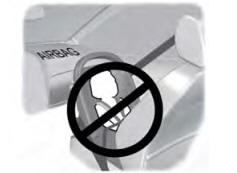
Children and Airbags
WARNING: Airbags can kill or injure a child in a child restraint. Never place a rear-facing child restraint in front of an active airbag. If you must use a forward-facing child restraint in the front seat, move the seat upon which the child restraint is installed all the way back.