Kia Picanto: Tyre Pressure Monitoring System (TPMS) : (if equipped) / Indication of Low Tyre Pressure. Tyre Pressure Monitoring System malfunction
Indication of Low Tyre Pressure
The low tyre pressure warning light ( ) illuminates when the system detects an
underinflated tyre. On some Kia Picanto models, a corresponding message may also appear on the instrument cluster.
If the warning light comes on, slow down, avoid sharp turns and brake gently. Have the tyres inspected by a professional workshop. Kia recommends visiting an authorised Kia dealer or service partner.
 |
A: Low pressure |
Check the pressure in all tyres and inflate them to the specified levels. If needed, have a tyre repaired or replaced.
If you cannot reach a nearby service station, stop in a safe place, check every tyre and follow the TPMS setting procedure. If you cannot adjust the pressure, use the repair tools to repair the tyre or fit the spare, then contact a professional workshop.
Kia recommends contacting an authorised Kia dealer or service partner for assistance.
Low tyre pressure may not be visible by eye, so use an accurate pressure gauge to check and adjust the tyres. A tyre warms up during an extended drive, which can raise its pressure reading. For a more accurate check, measure and adjust the pressure after the vehicle has travelled less than 1.6 km (1 mile) within the previous three hours.
WARNING
Damage caused by low pressure
Severely underinflated tyres can make the vehicle unstable, increase braking distances and contribute to loss of control.
Continuing to drive on underinflated tyres can cause them to overheat and fail.
CAUTION
-
The warning indicator may remain on after a spare tyre is fitted because its radius differs from that of a regular tyre. Replace the spare with a regular tyre.
-
The TPMS supports proper tyre maintenance but does not replace it. The driver is responsible for maintaining the correct pressures. Check all tyres monthly and keep them at the recommended pressure.
-
The warning light may illuminate if the TPMS has not been set in a situation where a reset is required.
-
In cold weather, the low tyre pressure indicator may illuminate even when the tyres were adjusted to the correct pressure. This does not necessarily indicate a TPMS malfunction: lower temperatures can reduce tyre pressure. Check the tyres and adjust them to the recommended pressure.
-
System performance may be reduced in the following situations:
-
The system has not been set correctly.
-
Tyres available on the market are being used instead of the recommended original tyres.
-
The vehicle is driven on snowy, slippery or unpaved roads.
-
The vehicle is driven through repeated sharp turns, rapid acceleration or hard braking.
-
The vehicle is driven at very low or high speeds.
-
The vehicle is overloaded.
-
A spare tyre or snow chains are fitted.
-
WARNING
-
Driving on an underinflated tyre can cause it to overheat and fail. Low pressure also reduces tread life, handling, braking performance and fuel efficiency, and can make the Kia Picanto unstable. Have the tyre pressure corrected by a professional workshop. Kia recommends contacting an authorised Kia dealer or service partner.
-
Sudden tyre damage caused by an external factor may not be detected immediately. If the vehicle becomes unstable, take your foot off the accelerator at once and move to a safe place to inspect it.
Tyre Pressure Monitoring System malfunction
If the TPMS detects a system fault, its malfunction indicator ( ) flashes for approximately one minute
and then remains illuminated. This sequence will repeat at subsequent vehicle start-ups for as long as the fault
persists.
If the indicator stays on or illuminates again after the TPMS has been set, have the system checked by a professional workshop. Kia recommends visiting an authorised Kia dealer or service partner.
WARNING
-
If the TPMS malfunctions, it may not alert you to low tyre pressure. Have the system serviced by a professional workshop. Kia recommends visiting an authorised Kia dealer or service partner.
-
Removing the TPMS or fitting related parts with a different specification may prevent the system from working and could cause a problem during the vehicle’s regular inspection.
-
When repairing TPMS components, replace them with parts that meet the original specification or the applicable TPMS requirements.
-
TPMS-related parts include the tyres, wheels, ABS unit and suspension.
-
WARNING
For Europe
Do not modify the vehicle, as modifications may interfere with TPMS operation.
Vehicles sold in the European market during the periods listed below must be equipped with a TPMS:
-
New vehicle models: from 1 November 2012
-
Current vehicle models: from 1 November 2014, based on vehicle registration dates
 System Overview. TPMS reset procedure
System Overview
The Tyre Pressure Monitoring System (TPMS) detects changes in tyre radius. If the pressure in a tyre falls below the
recommended level, the system warning light illuminates to ale..

Other information:
Ford Explorer 2020-2026 Service Manual: General Procedures - Engine Cooling System Flushing
Materials Name Specification Motorcraft® Premium Cooling System FlushVC-1 ESR-M14P7-A Flushing WARNING: Always allow the engine to cool before opening the cooling system. Do not unscrew the coolant pressure relief cap when the engine is operating or the cooling system is hot...
Ford Explorer 2020-2026 Service Manual: Removal and Installation - Front Seat
Removal WARNING: The following procedure describes critical repair steps required for correct seat component installation. Follow all notes and steps carefully. Do not place any objects between the seat components and the body of the vehicle, nor any objects within a joint internal to the seat structure...
Categories
- Manuals Home
- 6th Generation Explorer Owners Manual
- 6th Generation Explorer Service Manual
- Body and Paint
- General Service Information
- Electric Parking Brake
- New on site
- Most important about car
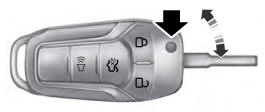
Integrated Keyhead Transmitter (If Equipped)
Use the key blade to start your vehicle and unlock or lock the driver door from outside your vehicle. The integrated keyhead transmitter functions as a programmed ignition key that operates all the locks and starts your vehicle, as well as a remote control.