
Ford Explorer: Battery, Mounting and Cables / Removal and Installation - Battery Current Sensor
Ford Explorer 2020-2026 Service Manual / Electrical / Battery and Charging System / Battery, Mounting and Cables / Removal and Installation - Battery Current Sensor
Removal
NOTE: Removal steps in this procedure may contain installation details.
-
-
Position the rear compartment storage cover upward.
-
Remove the rear compartment filler trim panel.
-
Remove the rear compartment storage/cupholder assembly.
-
Position the rear compartment storage cover upward.
.jpg) |
-
NOTICE: Make sure the positive battery terminal cover is in position while removing the negative battery cable clamp to prevent damage from a short to the positive terminal.
Remove the bolt and position the negative battery cable aside.
Torque: 62 lb.in (7 Nm)
.jpg) |
-
NOTE: The battery current sensor must be installed in the proper position and orientation to function correctly. Note the orientation and position of the battery current sensor tab.
Disconnect the battery current sensor electrical connector. Index-mark the battery cable at the battery current sensor. Remove and discard the tape securing the battery current sensor to the battery cable and remove the battery current sensor.
.jpg) |
Installation
-
To install, reverse the removal procedure.
 Removal and Installation - Battery Cables - 2.3L EcoBoost (201kW/273PS)
Removal
NOTE:
This procedure provides information about routing, retaining
points and connectors of the cable. It does not include the steps for
removing components to gain access to the cable...
 Removal and Installation - Battery Monitoring Sensor
Removal
NOTE:
When the battery is disconnected and connected, some
abnormal drive symptoms may occur while the vehicle relearns its
adaptive strategy...
Other information:
Ford Explorer 2020-2026 Owners Manual: Audio Control
You can operate the following functions with the control: Press to decrease volume level. Press to increase volume level. Press to silence the current media Press to access phone mode or to answer a phone call. Press to end a phone call...
Ford Explorer 2020-2026 Owners Manual: The Better Business Bureau (BBB) Auto Line Program (U.S. Only)
Your satisfaction is important to Ford Motor Company and to your dealer. If a warranty concern has not been resolved using the three-step procedure outlined earlier in this chapter in the Getting the Services you need section, you may be eligible to participate in the BBB AUTO LINE program...
Categories
- Manuals Home
- 6th Generation Explorer Owners Manual
- 6th Generation Explorer Service Manual
- Auxiliary Power Points
- Fuel Filler Funnel Location & Running Out of Fuel
- Interior Trim and Ornamentation
- New on site
- Most important about car
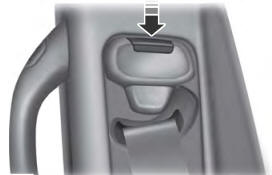
Seatbelt Height Adjustment
WARNING: Position the seatbelt height adjuster so that the seatbelt rests across the middle of your shoulder. Failure to adjust the seatbelt correctly could reduce its effectiveness and increase the risk of injury in a crash.

Copyright © 2026 www.foexplorer.com