Ford Explorer: Battery, Mounting and Cables / Description and Operation - Battery and Cables - System Operation and Component Description
System Operation
Gasoline Vehicles
The main battery, which is located in the engine compartment, is a 12 volt DC source connected in a negative ground system and is a voltage stabilizer for the 12 volt electrical system.
A BMS
is attached to the negative side of the battery cable and a generator
current sensor (if equipped) is attached to the positive side of the
battery cable. For description of these components,
Refer to: Charging System - System Operation and Component Description (414-00 Charging System - General Information, Description and Operation).
Hybrid Vehicles
Hybrid
vehicles utilize the main engine compartment battery and an additional
8Ah auxiliary battery. Just like the gasoline vehicles, the main engine
compartment battery has a BMS
that is attached to the negative side of the battery cable. The
auxiliary battery provides support for transient electrical loads that
occur during a crank event when the main engine compartment battery is
isolated from the rest of the vehicle and unable to provide transient
support. The auxiliary battery transient support is only needed if the
DC/DC 12 volt output is at or near full capacity (220A). The auxiliary
battery is located in the rear compartment, on the LH side of the vehicle. An auxiliary battery isolator, which is located above the main engine compartment battery, uses a LIN to supply diagnostics to the PCM. The auxiliary battery isolator receives a PWM signal from the PCM commanding the auxiliary battery isolator to open and close. During a cranking event the PCM
request the auxiliary battery isolator to open, disconnecting the
cranking main engine compartment battery, starter, and starter generator
from the 12 volt bus. The rest of the vehicle's electrical architecture
does not detect the low-voltage transient caused by engine cranking. A
battery current sensor is attached to the auxiliary battery negative
battery cable. For description of these components,
Refer to: Charging System - System Operation and Component Description (414-00 Charging System - General Information, Description and Operation).
All Vehicles
Ford Motor Company strongly recommends that all faulty batteries be returned to an authorized recycling facility for disposal.

 Diagnosis and Testing - Battery
General Equipment
Diagnostic Battery Charger
Use Ford approved battery test equipment.
Midtronics MDX-650 or P-300/P-600/490/1050
Midtronics GRX-3590 or 3000
Diagno..
Other information:
Ford Explorer 2020-2026 Service Manual: Removal and Installation - Rear Evaporator
Removal NOTE: The rear evaporator is available only as part of the rear climate control housing. Remove the rear climate control housing. Refer to: Rear Climate Control Housing (412-02 Rear Climate Control, Removal and Installation). Installation Transfer the components from the old housing to the new housing as required...
Ford Explorer 2020-2026 Owners Manual: High Voltage Battery
General Information WARNING: This battery pack should only be serviced by an authorized electric vehicle technician. Improper handling can result in personal injury or death. WARNING: Apply the parking brake, shift into park (P), switch the ignition off and remove the key before you open the hood or have any service or repair work completed...
Categories
- Manuals Home
- 6th Generation Explorer Owners Manual
- 6th Generation Explorer Service Manual
- Engine
- Electric Parking Brake
- Traction Control
- New on site
- Most important about car
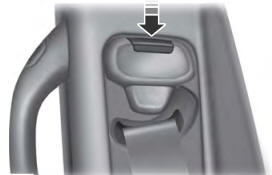
Seatbelt Height Adjustment
WARNING: Position the seatbelt height adjuster so that the seatbelt rests across the middle of your shoulder. Failure to adjust the seatbelt correctly could reduce its effectiveness and increase the risk of injury in a crash.